Anti Explosion Performance Testing Service – Accredited Explosion Resistance, Containment and Relief Evaluation for the Czech Market
Our internationally accredited laboratory delivers a comprehensive anti explosion performance testing service that provides Czech manufacturers, pressure equipment importers, chemical plant operators, dust-handling industries and safety system integrators with the independent, legally defensible data they need to demonstrate that their products can safely withstand, contain or relieve an internal explosion. Every test is conducted within the strict framework of ISO/IEC 17025, and each report bearing the ILAC mark is unconditionally accepted by the Czech Trade Inspection Authority, the Technical Inspection of the Czech Republic, the Czech Mining Authority and all notified bodies across the European Union. This anti explosion performance testing service simulates the extreme pressures, pressure-rise rates and thermal loads generated by the ignition of flammable gases, vapours or combustible dusts inside enclosures and process equipment. By measuring the reference explosion pressure, the dynamic overpressure, the relief capacity of bursting discs and vent panels, and the structural integrity after repeated explosions, we give Czech designers and plant safety managers the complete evidence package required for ATEX certification under Directive 2014/34/EU, CE marking under the Pressure Equipment Directive, and compliance with the Czech technical regulations on explosion prevention.
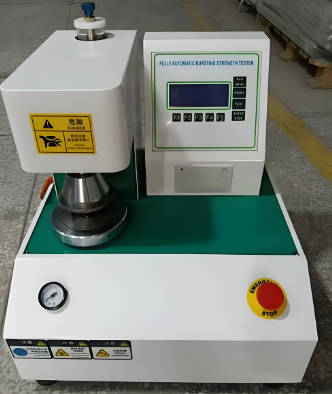
Product Samples We Regularly Subject to Anti Explosion Performance Testing
Our explosion-proof test pits, hydraulic and pneumatic high-pressure sources, and ultra-fast data acquisition systems accommodate a vast range of protective equipment and pressure-containing parts. The following categories represent the most frequently tested items:
- Flameproof enclosures and Ex d equipment – motor housings, junction boxes, control panels, light fittings and switchgear intended for Zones 1 and 2
- Non-electrical explosion-proof equipment – pumps, gearboxes, agitators and mechanical seals designed with an ignition‑protection concept
- Pressure vessels, reactors and autoclaves – process vessels, storage tanks, heat exchangers and high-pressure research autoclaves
- Rupture discs, explosion vents and bursting panels – forward-acting and reverse-acting rupture discs, graphite bursting discs and explosion relief panels for silos and baghouses
- Safety valves and pressure relief systems – spring-loaded, pilot-operated and balanced safety valves for gas, vapour and liquid service
- High-pressure pipes, hoses and expansion joints – hydraulic hoses, PTFE-lined assemblies and metallic bellows expansion joints
- Composite cylinders and overwrapped pressure vessels – CNG and hydrogen tanks, breathing-air cylinders and lightweight composite accumulators
- Automotive and aerospace components – common-rail injection pipes, airbag inflator housings, brake system accumulators and gas generator chambers
Flameproof Enclosures and Ex d Equipment – Anti Explosion Performance Testing According to EN 60079-1 and EN 60079-31
- Reference pressure determination and overpressure test according to ČSN EN 60079-1 (IEC 60079-1): the enclosure is filled with an explosive gas‑air mixture of the most severe ignition group – typically acetylene or hydrogen – and ignited. Ultra‑fast piezoelectric transducers record the peak explosion pressure and the pressure rise rate. This reference pressure is then multiplied by a safety factor of 1.5, and the enclosure is hydraulically or pneumatically pressurised to that static overpressure for a minimum of 10 seconds without permanent deformation that would alter the flamepath. This anti explosion performance testing service is mandatory for the ATEX type-examination certificate.
- Flamepath integrity and non‑transmission test: after the overpressure test, the explosion is repeated while the enclosure is surrounded by a sensitive explosive atmosphere. The flamepath gaps must cool the ejected gases sufficiently that no external ignition occurs. The gap dimensions are re‑measured and must remain within the certified tolerances.
- Thermal shock and combined load testing: the Ex d enclosure is subjected to repeated internal explosions while its outer surface is cooled with water spray, simulating outdoor conditions during a Czech winter storm. The test verifies that thermal stresses do not open the flamepath and that the enclosure remains safe after years of service.
- Explosion pressure testing of non‑electrical equipment according to ČSN EN 14460: mechanical equipment such as gearboxes and pumps is filled with a flammable mixture and ignited, and the ability of the casing to contain the explosion without external ignition is verified. The pressure-time history and the external surface temperature after the internal blast are recorded.
Pressure Vessels, Tanks and Composite Cylinders – Anti Explosion Performance Testing for Ultimate Containment Strength
- Hydraulic burst test according to ČSN EN 13445-5, ASME VIII and the EU Pressure Equipment Directive 2014/68/EU: the vessel is completely filled with water and pressurised at a controlled rate until rupture occurs. The maximum burst pressure, the fracture location and the deformation pattern are documented. For a vessel designed to the code, the burst pressure must not be less than 2.25 to 3.5 times the design pressure, validating the design calculations and material selection.
- Pneumatic explosion impulse testing of composite cylinders according to ČSN EN 12245 and ISO 11515: fully wrapped cylinders for CNG or hydrogen are subjected to a rapid pressure pulse that simulates an internal deflagration or a thermal runaway. The dynamic burst pressure and the fragmentation behaviour are evaluated against the safe fragmentation limits of the standard.
- Creep-to-failure and sustained pressure testing at extreme pressures: a pressure vessel or a fitting is held at a constant pressure equal to a high fraction of its design pressure for up to 1 000 hours. The time to rupture is recorded, and the stress-rupture curve is constructed, providing the long‑term resistance data required for Czech hydrogen refuelling stations and chemical reactors.
- Temperature-corrected burst testing for polymer‑lined vessels: for vessels with thermoplastic liners, the burst test is performed at the minimum and maximum design temperatures, typically -40 °C and +60 °C, to capture the change in ductility of the liner and its effect on the overall burst pressure.
Rupture Discs, Explosion Vents and Relief Systems – Anti Explosion Performance Testing According to EN ISO 4126-2 and EN 14797
- Burst pressure verification of rupture discs according to ČSN EN ISO 4126-2: a batch of rupture discs is pressurised on a calibrated test stand, and the actual burst pressure of each disc is recorded. The burst pressure must lie within the specified manufacturing tolerance, typically ±5 % for pressures above 2 bar. The opening time is captured with a high‑speed camera, and the batch certificate is issued for Czech plant inspectors.
- Dynamic burst testing under explosion-like pressure rise rates: the rupture disc is subjected to a pressure rise rate of 100 to 600 bar/s, replicating the exponential pressure increase of a dust or gas explosion. The dynamic burst pressure and any fragmentation of the disc are assessed, and the disc is certified for use as an explosion vent on a silo or a filter housing.
- Explosion vent panel efficiency and deployment testing according to ČSN EN 14491: a flat or domed explosion panel installed on a representative vessel is burst by a controlled gas explosion. The static burst pressure, the opening speed and the fully opened vent area are measured, and the data are used to calculate the required vent area for a given silo volume and dust explosibility class.
- Set pressure and overpressure test for safety valves according to ČSN EN ISO 4126-1: the valve is mounted on a calibrated test bench, and the inlet pressure is slowly raised until the valve pops. The popping pressure, the reseating pressure and the blowdown are recorded. The valve is then subjected to a full overpressure of 110 % of the set pressure, and the flow capacity is verified by mass flow measurement.
- Pop action under explosive pressure rise: a fast‑opening solenoid or a bursting disc upstream of the safety valve generates a pressure front with a rise time of a few milliseconds. The response time of the valve and the peak pressure reached before the valve opens are recorded, evaluating the valve's suitability for deflagration applications in biogas plants and chemical reactors.
High-Pressure Pipes, Hoses and Expansion Joints – Anti Explosion Performance Testing for Impulse and Burst Resistance
- Burst pressure of hydraulic and process hoses according to ČSN EN ISO 1402 and SAE J343: the hose assembly is pressurised at a controlled rate until failure. The minimum burst pressure must be at least twice the working pressure for hydraulic hoses and four times for thermoplastic hoses. The location and nature of the burst are recorded.
- Pneumatic explosion impulse testing of metallic bellows and expansion joints: a bellows unit is subjected to a defined internal pressure pulse with a rise time of 5 ms to simulate a deflagration inside a pipe. The residual deformation and the leak-tightness after the pulse are evaluated, and the number of pulses the unit can survive without failure is reported.
- Explosive decompression resistance of seals and hoses for high‑pressure gas service: the specimen is saturated with gas at extreme pressure and then rapidly vented. The resistance of elastomeric seals to blistering and cracking, and the burst strength of the metal parts after repeated explosive decompression cycles, are measured according to ISO 23936-2 and customer specifications.
Dust Explosion Protection Systems – Anti Explosion Performance Testing for Venting, Suppression and Isolation
- Determination of dust explosion indices (pmax and Kst) according to ČSN EN 14034-1 and -2: a dust sample is dispersed in a 1 m³ or 20 L sphere and ignited. The maximum explosion pressure and the normalised rate of pressure rise are measured, and the dust is classified into St1, St2 or St3. This anti explosion performance testing service is the essential first step for the design of any dust explosion protection system for a Czech wood‑processing, food or chemical plant.
- Explosion venting efficiency for dust-handling equipment according to ČSN EN 14491: a vent panel is installed on a test silo, and a controlled dust explosion is initiated. The reduced pressure inside the vessel is measured and must stay below the pressure‑resistance of the protected equipment. The vent area, the static activation pressure and the presence of any flame discharge are documented.
- Explosion suppression system activation and efficacy test: a suppression bottle is triggered during the early stages of a dust explosion, and the pressure trace inside the vessel is recorded. The test verifies that the suppressant is injected fast enough to quench the flame front and that the final pressure remains safely below the vessel's strength.
- Explosion isolation valve and chemical barrier testing: an isolation device installed on a connecting duct is tested by initiating an explosion upstream and measuring whether the pressure wave or flame propagates through the barrier. The closing time and the residual leakage are reported, and the device is certified for use on Czech industrial ductwork.
Report Acceptance and Regulatory Compliance for the Czech Republic
All tests performed within our anti explosion performance testing service are executed under the fully accredited scope of our ISO/IEC 17025 quality management system. Each test report that carries the ILAC mark is therefore automatically recognised by the Czech Trade Inspection Authority, the Technical Inspection of the Czech Republic, the Czech Mining Authority and all notified bodies in the European Union. For Czech explosion‑protection equipment manufacturers, pressure vessel builders, chemical plant operators and safety system integrators, the report constitutes legally robust evidence that the product or system meets the explosion resistance and relief requirements of the applicable harmonised standards. The documentation can be directly used to support ATEX certification under Directive 2014/34/EU, CE marking under the Pressure Equipment Directive 2014/68/EU, the issuing of inspection certificates according to ČSN EN 10204, and the demonstration of compliance with the Czech technical regulations on occupational safety in explosive environments.