Breakdown Voltage Testing Service – Accredited Dielectric Strength Evaluation for Electrical Components and Insulating Materials on the Czech Market
Our internationally accredited laboratory provides a dedicated breakdown voltage testing service that delivers the precise, repeatable dielectric strength data Czech manufacturers, importers and operators of electrical equipment require to demonstrate safety and conformity. All tests are conducted within the strict framework of ISO/IEC 17025, and every report bearing the ILAC mark is unconditionally accepted by the Czech Trade Inspection Authority, the Czech Metrology Institute and all notified bodies across the European Union. The breakdown voltage testing service quantifies the maximum electric field a material or component can withstand before catastrophic failure – a parameter that is fundamental to the certification of transformers, cables, switchgear, capacitors, and every piece of equipment connected to the low-voltage and medium-voltage grids of the Czech Republic. Whether verifying the purity of insulating oil, the quality of a varnish impregnation, or the clearance and creepage distances of a printed circuit board, our laboratory generates the legally robust evidence needed for CE marking under the Low Voltage Directive and for compliance with the Czech technical standards.
Product Samples We Regularly Subject to Breakdown Voltage Testing
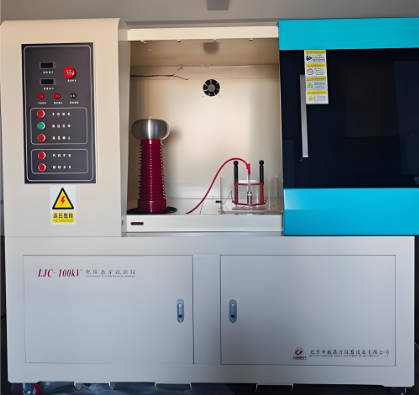
Our test cells and high-voltage sources with outputs up to 100 kV AC, 150 kV DC and 200 kV impulse cover an extremely wide range of insulating media and finished products. The following categories represent the most frequently tested items:
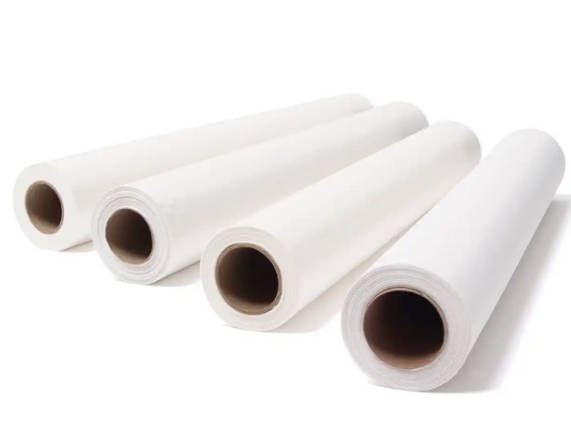
- Solid insulating materials and laminates – rigid boards, flexible films, presspaper, pressboard, mica composites, and glass-fibre reinforced epoxy laminates for slot liners and barriers
- Liquid dielectrics – mineral and synthetic transformer oils, silicone fluids, ester-based liquids and regenerated oils sampled from in-service transformers
- Enamelled wires and winding wires – copper and aluminium magnet wire with polyurethane, polyester, polyesterimide and polyamide-imide coatings
- Electrical cables and accessories – power cables from low voltage to 35 kV, cable joints, terminations, heat-shrinkable sleeves and busbar insulation
- Capacitors and passive components – film capacitors, ceramic capacitors, safety capacitors of class X and Y, and filter chokes
- Printed circuit boards and assemblies – bare boards, multilayer rigid and flexible PCBs, and populated assemblies tested for inter-track and layer-to-layer breakdown
- Connectors, terminal blocks and switches – industrial connectors, relay sockets, fuse holders and appliance switches for which dielectric strength is a safety-critical parameter
- Motor and transformer insulation systems – complete stators, field coils and dry-type transformer windings subjected to routine or type hipot testing
Solid Insulating Materials – Breakdown Voltage Testing According to IEC 60243 and ASTM D149
- Short-time breakdown voltage test on solid insulating materials according to ČSN EN 60243-1 (IEC 60243-1): the specimen is placed between two electrodes – typically spherical or cylindrical – and immersed in transformer oil to prevent flashover. An alternating voltage at 50 Hz is applied at a controlled rate of rise until breakdown occurs. The dielectric strength is reported in kV/mm, and the test is repeated on multiple specimens to establish the mean and coefficient of variation. For Czech manufacturers of insulating sheets and laminates, this value is the primary quality control parameter and is checked against the declared value in the material specification.
- Step-by-step and proof-voltage test according to ČSN EN 60243-1: a voltage below the expected breakdown level is applied and maintained for a prescribed time, then raised in steps. This procedure detects materials that fail due to thermal instability or internal partial discharges rather than instantaneous electronic breakdown.
- Breakdown voltage parallel to the surface (tracking resistance) according to ČSN EN 60587 and IEC 60112: electrodes are placed on the surface of the insulating material, and a voltage is applied while a conductive contaminant solution is dripped between them. The comparative tracking index (CTI) and the inclined-plane tracking voltage are determined, which are crucial for the safe design of uninsulated live parts in switchgear and terminal blocks.
- Dielectric strength of thin films and foils according to ASTM D149 and internal procedures: films as thin as 20 µm, used in capacitor dielectrics and flexible printed circuits, are tested with small-diameter electrodes under oil. The breakdown voltage is measured, and the number of defects per square metre is calculated from a scanning test of the entire surface.
- Effect of thermal ageing and moisture on breakdown voltage: specimens are aged at elevated temperatures or conditioned at high humidity before the breakdown test. The reduction in dielectric strength quantifies the material's long-term reliability in the hot, humid environment of a Czech machine room or a drying kiln.
Liquid Dielectrics – Breakdown Voltage Testing Service for Transformer and Switchgear Oils
- Determination of the breakdown voltage of insulating liquids according to ČSN EN 60156 (IEC 60156): a 2.5 mm gap between two mushroom-shaped electrodes is immersed in the oil sample, and an AC voltage at 50 Hz is raised at a rate of 2 kV/s until breakdown. Six consecutive breakdowns are recorded, and the average of the last five values is reported. For Czech transformer operators, a breakdown voltage above 30 kV (for voltages up to 72.5 kV) or above 50 kV (for higher voltages) indicates that the oil is dry and free of particulate contamination.
- Measurement of water content, dissipation factor and resistivity of insulating oil alongside breakdown voltage: the breakdown voltage alone does not fully characterise the oil. We combine it with Karl-Fischer titration for moisture, and with tan δ and resistivity measurements at 90 °C according to ČSN EN 60247 and ČSN EN 61620. This complete diagnostic profile allows Czech maintenance engineers to decide whether an oil can be regenerated or must be replaced.
- Breakdown voltage of ester-based and silicone insulating fluids: natural and synthetic esters, which are increasingly used in Czech distribution transformers for fire safety, are tested with the same electrode gap but often show a different breakdown behaviour in the presence of moisture. We report the breakdown voltage together with the moisture saturation curve specific to the ester type.
- Particle count and filterability correlated with breakdown voltage: if the breakdown voltage is unexpectedly low, the oil is passed through a laser particle counter. The number of particles per 100 ml in the size range 5–100 µm is reported, and the relationship between particle concentration and breakdown voltage is used to set the oil filtration schedule.
Enamelled Wires, Cables and Complete Insulated Assemblies – High-Potential Withstand and Breakdown Voltage Testing
- Breakdown voltage of enamelled winding wires according to ČSN EN 60851-5 (IEC 60851-5) and ASTM D1676: a single wire is twisted with a second wire or with a metal mandrel, and an increasing AC voltage is applied between the conductor and the external electrode. The breakdown voltage is recorded, and the number of faults per metre is determined by a continuous pin-hole test. Czech motor and transformer winders rely on this test to reject wire reels that contain insulation defects.
- High-voltage withstand test on power cables according to ČSN EN 60229 and ČSN EN 62067: the finished cable is subjected to either an AC voltage at the power frequency, a DC voltage, or a very-low-frequency (VLF) sinusoidal voltage of 0.1 Hz. The test voltage and duration are specified by the cable standard – typically 3 to 4 times the rated voltage for 30 minutes for VLF testing. This is the routine test that must be passed by every metre of medium-voltage cable delivered to Czech utility companies.
- Breakdown voltage of complete cable accessories and joints: premoulded joints, terminations and separable connectors are installed on a cable and subjected to an AC voltage ramp until breakdown. The failure location and the partial discharge inception voltage are recorded. For Czech cable installers, the test provides proof that the accessory, when correctly installed, does not weaken the dielectric system.
- Electrical strength of motor and transformer windings – routine hipot test: the winding is tested with an AC voltage of twice the rated voltage plus 1000 V for one minute, or with a DC voltage for windings with high capacitance. The leakage current is monitored, and any rapid increase is an early warning of weak turn-to-turn or phase-to-ground insulation.
Breakdown Voltage Testing of Connectors, Switches and Electrical Appliances – Clearance and Creepage Verification
- Dielectric voltage withstand test on connectors and appliance couplers according to ČSN EN 60320 and ČSN EN 61984: a test voltage of 2000 V AC or higher, depending on the rated impulse withstand voltage, is applied between live parts and accessible metal surfaces, and between contacts of opposite polarity. The test is performed after conditioning in humid air, and no flashover or breakdown is permitted. For Czech importers of industrial connectors, this test is part of the CE conformity assessment.
- Partial discharge inception voltage and breakdown test on printed circuit boards: a voltage ramp is applied between adjacent tracks on a bare PCB coupon, and the partial discharge inception and extinction voltages are recorded. The test reveals voids in the resin or insufficient distance between tracks that would lead to long-term failure in equipment such as photovoltaic inverters and frequency converters.
- Breakdown voltage of insulating barriers and busbar insulation: insulators and barriers are tested with a high-voltage electrode in a dry and a wet condition. The flashover voltage is measured, and the creepage distance is verified to be in accordance with the pollution degree of the intended environment.
Report Acceptance and Regulatory Compliance for the Czech Republic
All measurements performed within our breakdown voltage testing service are executed under the fully accredited scope of our ISO/IEC 17025 quality management system. Each test report that carries the ILAC mark is therefore recognised automatically by the Czech Trade Inspection Authority, the Czech Metrology Institute, customs offices and all notified bodies in the European Union. For Czech manufacturers of electrical equipment, transformer operators, cable suppliers and importers of insulating materials, the report constitutes legally robust evidence that the dielectric strength meets the requirements of the applicable harmonised standards and the Low Voltage Directive. The documentation can be directly used to support CE marking, to issue inspection certificates according to ČSN EN 10204, to compile the technical file for electrical products, and to provide an indisputable basis in commercial disputes or incident investigations concerning insulation failure.