Compression Strength Research and Testing – Accredited Evaluation of Load-Bearing Capacity for the Czech Market
Our internationally accredited laboratory delivers comprehensive compression strength research and testing services that span the entire lifecycle of a product, from material selection and prototype validation to routine quality control and failure analysis. All testing is performed within the strict framework of ISO/IEC 17025, and every report bearing the ILAC mark is therefore unconditionally accepted by the Czech Trade Inspection Authority, technical inspection bodies, customs offices and all notified organisations in the European Union. For Czech manufacturers, importers and construction companies, a reliably measured compressive strength is not merely a number on a data sheet – it is the foundation for structural safety under the Eurocodes, for CE marking under the Construction Products Regulation, and for the cost-efficient use of materials in everything from concrete columns to lightweight packaging.
Product Samples We Regularly Subject to Compression Strength Research and Testing
Our servo-hydraulic and electromechanical testing machines with capacities from 10 kN to 3 000 kN accommodate an exceptionally wide range of specimens. The following categories represent the most frequently tested items received from Czech and European clients:
- Concrete, mortar and cementitious materials – cubes, cylinders, drilled cores, sprayed concrete panels, repair mortars and grouts
- Masonry units and natural stone – clay bricks, calcium silicate blocks, aerated concrete blocks, dimension stone and paving slabs
- Metals and metal matrix composites – ductile iron, grey cast iron, sintered steels and aluminium foams
- Plastics and polymer composites – thermoplastics, thermosets, glass-fibre reinforced laminates and carbon-fibre components
- Rigid foams and thermal insulation – expanded polystyrene, extruded polystyrene, polyurethane foam, phenolic foam and cellular glass
- Wood and wood-based panels – structural timber, glued laminated timber, cross-laminated timber, plywood, OSB and particleboard
- Packaging and transport containers – corrugated fibreboard boxes, solid board cartons, plastic crates, pallets and IBCs
- Ceramics, refractories and advanced brittle materials – technical ceramics, refractory bricks and castables, porcelain insulators and hardmetals
Compression Strength of Concrete, Mortar and Cement-Based Materials – ČSN EN 12390 and Associated Standards
- Compressive strength of hardened concrete specimens according to ČSN EN 12390-3: cubes with an edge length of 150 mm or cylinders 150 mm in diameter and 300 mm in height are loaded in a calibrated compression machine at a constant stress rate of 0.6 MPa/s ±0.2 MPa/s until failure. The maximum load sustained is recorded, and the compressive strength in MPa is reported to the nearest 0.1 MPa. For drilled cores extracted from existing structures, the strength is corrected for the length-to-diameter ratio and the presence of reinforcement, and the results are used to assess the structural condition of Czech bridges, industrial floors and building frames.
- Compressive strength of masonry units according to ČSN EN 772-1: whole bricks or blocks are capped with mortar or ground flat, and the load is applied perpendicular to the bed face. The normalised compressive strength is calculated from the failure load and the cross-sectional area, with correction factors for the geometry and moisture condition. The declared values form the basis for the design of load-bearing masonry walls in Czech residential and commercial buildings according to ČSN EN 1996.
- Testing of lightweight and aerated autoclaved concrete according to ČSN EN 679 and ČSN EN 1354: lower-strength cellular concretes are tested with adapted loading rates and capping materials to avoid premature crushing of the soft matrix. The dry density is determined on the same specimen, and the strength-to-density ratio is used to classify the product for thermal insulation and structural purposes.
- Compressive strength of repair mortars, screeds and grouts according to ČSN EN 1015-11 and ČSN EN 13892-2: prisms of 40×40×160 mm are tested in flexure first and then the two halves are subjected to compression over a 40×40 mm platen. The test verifies that the mortar meets the strength class required for structural repairs or floor screeds in Czech renovation projects.
- Determination of the static modulus of elasticity in compression according to ČSN EN 12390-13: the specimen is instrumented with precision extensometers and loaded in cycles up to one-third of the anticipated compressive strength. The secant modulus of elasticity Ecm is calculated from the stress-strain curve and is essential for the deformation analysis of concrete structures under service loads.
Compression Strength of Metals, Cast Irons and Porous Metallic Structures
- Compression test for metallic materials according to ČSN EN ISO 6892-1 principles and ASTM E9: cylindrical specimens with a height-to-diameter ratio of 1.5 to 2.5 are compressed between flat, hardened platens. The 0.2 % proof strength in compression, the compressive yield point and the modulus of elasticity in compression are determined. This test is routinely applied to bearing steels, cast irons and sintered bushings used by Czech machinery manufacturers, where the material must withstand high compressive service loads without plastic collapse.
- Compression testing of grey and ductile cast iron according to ČSN EN 1561 and customer specifications: cast iron samples are machined from separately cast test bars or from cast-on coupons. The compressive strength is typically several times higher than the tensile strength, and the test provides data for the design of machine frames, press columns and brake components where the dominant load is compressive.
- Determination of the compressive properties of metallic foams and lightweight structures according to ČSN EN ISO 13314: aluminium and steel foam specimens are compressed at a constant crosshead speed. The full stress-strain curve is recorded, and the plateau stress, the energy absorption capacity up to 50 % strain and the densification strain are evaluated. These parameters are used by Czech designers of crash absorbers, impact protection systems and lightweight sandwich panels for transport vehicles.
Compression Strength of Plastics, Fibre-Reinforced Composites and Polymer Foams
- Compressive properties of unreinforced and reinforced plastics according to ČSN EN ISO 604: prismatic or cylindrical specimens are compressed between two precisely aligned anvils at a constant test speed of 1 mm/min for modulus determination and up to 50 mm/min for strength measurement. The compressive yield stress, the compressive strength at break and the compressive modulus are calculated. For Czech injection moulders and extruders, this test provides the data needed to verify that the incoming granulate meets the supplier's specification and that the finished parts, such as spacers and connectors, can carry the design load.
- Compressive strength of fibre-reinforced plastic composites according to ČSN EN 2850 and ASTM D6641: specimens with a short gauge length are loaded in a combined loading compression fixture to prevent buckling. Both the in-plane compressive strength parallel and perpendicular to the fibre direction are measured. The data are critical for the design of composite bridges, railway components and wind turbine parts manufactured in the Czech Republic.
- Compressive behaviour of rigid cellular plastics according to ČSN EN ISO 844: specimens of EPS, XPS, PUR and phenolic foam are compressed between parallel platens at a speed related to the specimen thickness. The compressive stress at 10 % relative deformation and the maximum compressive strength are reported. These values directly determine the application category of thermal insulation boards under ČSN EN 13163, 13164 and 13165 and are used to specify insulation for floor slabs, flat roofs and foundation protection in Czech construction.
- Compressive creep and long-term deformation of cellular plastics according to ČSN EN 1606: a constant compressive stress is applied to the foam specimen for 28 days or longer at a controlled temperature and humidity. The compressive creep is monitored, and the extrapolated deformation after 50 years is reported. This test is frequently requested by Czech specifiers of load-bearing insulation under industrial floors and storage tanks.
Compression Strength of Wood, Timber and Wood-Based Panel Products
- Compressive strength parallel to the grain according to ČSN EN 408: clear, straight-grained timber specimens 40×40×180 mm are loaded in compression between a spherical seated platen and a fixed platen. The maximum load is recorded, and the compressive strength and modulus of elasticity in compression parallel to the grain are calculated. The results are used for the assignment of timber to strength classes C14 to C50 according to ČSN EN 338, which are the basis for structural design in Czech timber construction.
- Compressive strength perpendicular to the grain: the specimen is loaded through a steel plate across the full width, and the stress at 1 % and 3 % deformation is determined. This parameter governs the bearing capacity at supports and connections in timber frames and is essential for the verification of compression perpendicular to the grain in trusses and purlins.
- Compression testing of wood-based panels – plywood, OSB and particleboard according to ČSN EN 789 and ASTM D3501: specimens are tested in compression in the plane of the board and perpendicular to the plane. The compressive strength and modulus are used by furniture manufacturers and packaging companies in the Czech Republic to confirm that the boards can sustain racking loads and stack pressure.
- Testing of glued laminated timber and cross-laminated timber: larger-scale specimens representing full cross-sections are compressed to validate the design assumptions for columns and wall panels in multi-storey timber buildings. The load is applied with a spherical bearing to avoid eccentricity, and the failure mode is documented.
Compression Strength of Packaging, Transport Units and Load Carriers
- Top-to-bottom compression test for corrugated fibreboard boxes according to ČSN EN ISO 12048: the empty or filled box is compressed between two rigid platens at a constant speed of 10 mm/min. The maximum compression force in newtons is recorded, and the force-deflection curve is used to identify the buckling point. The safe stacking height in a warehouse is then calculated by dividing the maximum load by the safety factor and the weight of a single loaded box. This is the most frequently requested test by Czech packaging suppliers for e-commerce and export shipments.
- Stacking test under static load according to ČSN EN ISO 2234: a completely filled package is placed on a horizontal surface, and a dead weight equal to the mass of the packages that would be stacked on it during transport is applied for 24 hours or until equilibrium is reached. The deformation of the package is measured, and the contents are inspected for damage. The test simulates the long-term compression experienced by lower cartons in a sea container or a high-bay warehouse.
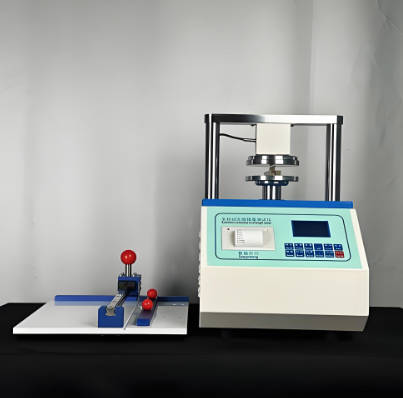
- Edgewise compression strength of corrugated fibreboard (ECT) according to ČSN EN ISO 3037: a narrow strip of board is placed on edge in a compression fixture and loaded until the flutes collapse. The edgewise crush resistance in kN/m is an excellent predictor of the box stacking performance and is used by board manufacturers and converters for quality control.
- Flat crush test for corrugated medium (FCT) according to ČSN EN ISO 3035: a single-fluted specimen is compressed between circular platens. The flat crush resistance correlates with the rigidity and printability of the board.
- Compression testing of plastic crates, totes and pallets according to ČSN EN 13117 and ČSN EN ISO 8611: stackable containers and pallets are loaded to the rated stack load under controlled temperature conditions. The deflection, residual deformation and stability are evaluated. Tests are performed at low temperature (-20 °C) and elevated temperature (+40 °C) to reflect the Czech climate and cold store use.
Compression Strength of Ceramics, Refractories, Glass and Hardmetals
- Compressive strength of dense shaped refractory products according to ČSN EN 993-5: cubic or cylindrical specimens are ground flat and parallel and compressed between ceramic platens to avoid indentation. The cold compressive strength is reported as the maximum stress sustained. For hot compressive strength, the specimen is heated to a specified temperature up to 1 500 °C and held under load until failure. These data are indispensable for the lining design of kilns, boilers and incinerators operated by Czech industrial plants.
- Compressive strength of advanced technical ceramics according to ČSN EN 658-1 and ASTM C1424: very small and precisely machined specimens are compressed in a carefully aligned fixture. Because ceramics exhibit brittle behaviour, the results are analysed using Weibull statistics to provide a characteristic strength and a Weibull modulus. The test supports the development of ceramic armour, cutting tools and medical implants.
- Compressive strength of glass and glass-ceramics: cylindrical specimens with optical-grade polished ends are tested according to ASTM C158. The compressive strength, which is typically an order of magnitude higher than the tensile strength, is used for the design of structural glass columns, fins and beams in Czech architectural projects.
- Transverse rupture strength (TRS) for hardmetals correlated with compression behaviour: although the TRS test according to ČSN EN ISO 3327 is primarily a bending test, the results are often correlated with compressive strength data for quality control purposes. When specifically requested, we perform a direct compression test on hardmetal cylinders to determine the ultimate compressive strength of cutting tool blanks.
Report Acceptance and Regulatory Compliance for the Czech Republic
All of the compression strength research and testing described above is performed within the fully accredited framework of ISO/IEC 17025. Every test report that bears the ILAC mark is therefore automatically recognised by the Czech Trade Inspection Authority, technical inspection bodies, customs offices and all notified organisations in the European Union. For Czech construction companies, packaging manufacturers, materials suppliers and industrial designers, these reports constitute legally robust evidence of compliance with the relevant harmonised product standards. They can be directly used to issue Declarations of Performance under the Construction Products Regulation, to support CE marking, to prepare inspection certificates according to ČSN EN 10204, and to resolve commercial or technical disputes regarding the load-bearing capacity of materials and products.