Fracture Bending Load Testing Service – Accredited Flexural and Bend Fracture Evaluation for the Czech Market
Our internationally accredited laboratory provides a dedicated fracture bending load testing service that evaluates the strength, ductility and failure behaviour of materials and components when subjected to bending forces. Every test is conducted within our rigid ISO/IEC 17025 quality system, and each report bearing the ILAC mark is unconditionally accepted by the Czech Trade Inspection Authority, technical inspection bodies and all notified organisations in the European Union. For Czech manufacturers, importers and fabricators, a correctly executed fracture bending test is essential for verifying weld quality, confirming the formability of metallic sheets, validating the structural integrity of brittle materials and ensuring that plastic and composite components will withstand the mechanical loads encountered during installation and service. By precisely measuring the load and deflection at fracture, we deliver independent data that supports CE marking, welding procedure qualification and material certification according to ČSN EN 10204.
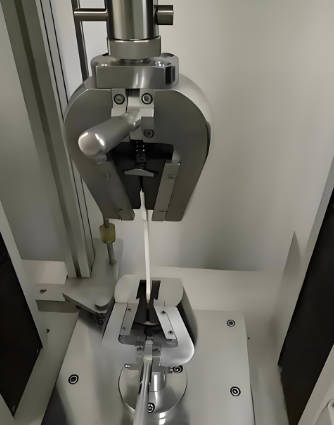
Product Samples We Regularly Subject to Fracture Bending Load Testing
Our servo-hydraulic and electromechanical testing machines can accommodate specimens from a few millimetres in thickness up to full-scale structural elements. The following categories represent the most frequently tested items entering our facility:
- Metallic sheets, plates and strips – hot-rolled and cold-rolled steel, stainless steel, aluminium and copper alloys intended for bending and roll-forming operations
- Welded joints and brazed connections – butt welds, fillet welds and spot welds on pressure vessel steels, structural steels and aluminium, including specimens from welder qualification tests
- Cast irons and sintered metals – grey iron, ductile iron and powder metallurgy components where bending strength is a critical design parameter
- Technical ceramics and glass – ceramic substrates, porcelain insulators, glass sheets and glass-ceramic components for electronics and building applications
- Plastics and fibre-reinforced composites – unreinforced and glass-fibre or carbon-fibre reinforced thermoplastics and thermosets, pultruded profiles and laminates
- Rigid foams and cementitious materials – fibre-cement boards, gypsum plasterboards and rigid foam insulation products where transverse strength is specified
- Hardmetals and tool materials – cemented carbides and cermets where the transverse rupture strength is the primary quality control parameter
- Mechanical fasteners under bending – bolts, rivets and pins subjected to shear-bending combined loading
Fracture Bending Load Testing of Metallic Materials – ČSN EN ISO 7438 and Related Standards
- Bend test for metallic materials according to ČSN EN ISO 7438: a rectangular or round specimen is bent over a mandrel of a specified diameter until a prescribed angle – typically 90°, 120° or 180° – is reached. The test is performed at ambient temperature using a universal testing machine equipped with a bending device and a roller support. The specimen is examined for cracks or other discontinuities on the tension surface. The absence of visible cracks at a given mandrel diameter demonstrates the material's formability and ductility, and the result is reported as "passed" or "failed" with reference to the mandrel diameter used.
- Three-point and four-point bending for determination of flexural strength and strain according to ČSN EN ISO 7438 and ASTM E290: when a quantitative value of bending strength is required, the specimen is loaded under three-point or four-point bending with a defined span. The load-deflection curve is recorded, and the bending modulus of elasticity, the yield strength in bending and the maximum bending stress at fracture are calculated from the specimen geometry and the recorded loads. Four-point bending produces a region of constant bending moment free of shear forces and is preferred for brittle materials.
- Reverse bend and alternating bend tests for wire and thin sheet: wires for fencing, springs and cables are subjected to alternating bending through 90° in opposite directions according to ČSN EN ISO 7801 and ČSN EN ISO 7799 until fracture occurs. The number of bends sustained is reported and used to verify the uniformity of the wire drawing process and the surface quality of the product.
- Bend test for reinforcement steel and prestressing steel according to ČSN EN ISO 15630-1 and ČSN EN ISO 15630-2: reinforcing bars and prestressing wires are bent around a mandrel to an angle of 180° and subsequently bent back by at least 20°. The test verifies that the rebar can be bent on the construction site without fracturing and that the ribs do not separate from the core. This is a mandatory requirement for Czech concrete structures according to ČSN EN 1992-1-1.
Fracture Bending Load Testing of Welded Joints – ČSN EN ISO 5173 and ASME IX
- Transverse bend test for butt welds according to ČSN EN ISO 5173: the welded test plate is machined into rectangular specimens that span the weld. For a root bend test, the root surface of the weld is placed in tension; for a face bend test, the face of the weld is placed in tension; for a side bend test, the specimen is turned 90° so that the entire cross-section of the weld is stressed. The specimen is bent over a former of a specified diameter until an angle of 180° is achieved. No single crack exceeding 3 mm in any direction is permitted on the tension surface. The test is mandatory for welding procedure qualification and welder performance qualification under ČSN EN ISO 9606 and ČSN EN ISO 15614.
- Longitudinal bend test for welds: the weld metal itself is oriented parallel to the bending axis and placed in tension. This test is used to evaluate the ductility of the all-weld metal and is frequently required for hardfacing overlays and repair welds where maximum deposit ductility must be verified.
- Bend test for spot welds and projection welds according to ČSN EN ISO 14270: a chisel is driven between the sheets to peel the weld, or a bending moment is applied to the assembly to force open the weld. The diameter of the weld nugget and the fracture mode – interfacial or pull-out – are evaluated. This test is essential for automotive body-in-white suppliers operating in the Czech Republic.
- Bend test for brazed joints according to ČSN EN 12797: a butt-brazed or lap-brazed specimen is subjected to bending. The load at which visible cracking or separation of the braze metal occurs is recorded and compared with the strength of the base material to assess the soundness of the brazing process.
Fracture Bending Load Testing of Plastics and Fibre-Reinforced Composites – ČSN EN ISO 178 and ČSN EN ISO 14125
- Flexural properties of unreinforced and reinforced plastics according to ČSN EN ISO 178: a rectangular specimen is supported on two rollers and loaded at mid-span at a constant test speed. The flexural strength, flexural modulus and strain at break are calculated from the load-deflection curve. The test is used by Czech manufacturers of injection-moulded and extruded plastic parts to verify that the material meets the specified mechanical properties and to compare different grades or batches.
- Flexural test for fibre-reinforced plastic composites according to ČSN EN ISO 14125: for high-performance composites, a four-point bending configuration is used to avoid premature failure at the loading point. The test determines the flexural strength and modulus for laminates with unidirectional, woven or mat reinforcement. The results are critical for structural components used in transport, construction and sporting goods marketed in the Czech Republic.
- Bend test for thermoplastic pipes and fittings: a ring cut from a pipe is compressed between parallel plates until a specified deflection is reached without visible cracking, according to ČSN EN ISO 13968 and product-specific standards. This test is routinely performed on PVC-U, PP and PE pipes for Czech water and gas distribution networks.
- Cantilever beam bending for rigid foams and sandwich panels: a long specimen is clamped at one end and loaded at the free end to determine the bending strength and core shear strength of sandwich structures. This simulates the load on a cantilevered building element and is used for the certification of insulated panels for Czech industrial buildings.
Fracture Bending Load Testing of Ceramics, Glass and Hardmetals – Transverse Rupture Strength
- Determination of transverse rupture strength (TRS) for hardmetals according to ČSN EN ISO 3327: a rectangular test piece of sintered hardmetal is subjected to three-point bending until fracture. The transverse rupture strength in N/mm² is calculated from the breaking load, the support span and the specimen dimensions. This is the primary quality control test for cemented carbide cutting tool blanks, mining inserts and wear parts.
- Bend test for advanced ceramics according to ČSN EN 843-1 and ASTM C1161: the flexural strength of fine ceramics is measured in three-point or four-point bending with a carefully aligned fixture and a highly polished specimen surface. Because ceramics exhibit brittle fracture, the results are analysed using Weibull statistics to provide a characteristic strength and a Weibull modulus that reflects the reliability of the material. This data is used by manufacturers of medical implants, armour plates and semiconductor equipment components.
- Bending strength of glass and glass-ceramics according to ČSN EN 1288-3 and ASTM C158: glass specimens with well-defined surface finishes are loaded in four-point bending. The strength values are used to design glazing for Czech buildings and to validate thermal or chemical tempering processes.
- Bend test for concrete and fibre-cement products: specimens of fibre-cement corrugated sheets, flat boards and concrete roof tiles are tested under bending according to ČSN EN 494 and ČSN EN 491. The breaking load and the deflection at break are measured to ensure that the products meet the minimum requirements for wind and snow loads in the Czech Republic.
Report Acceptance and Regulatory Compliance for the Czech Republic
All of the fracture bending load tests described above are performed within the fully accredited framework of ISO/IEC 17025. Every test report that bears the ILAC mark is therefore automatically recognised by the Czech Trade Inspection Authority, customs offices, technical inspection bodies and all notified organisations in the European Union. For Czech steel stockholders, welding workshops, plastics converters and construction product manufacturers, these reports constitute legally robust evidence of conformity with the relevant harmonised standards. They can be used directly to support CE marking, to issue inspection certificates according to ČSN EN 10204, to qualify welding procedures, and to resolve disputes concerning material quality and product performance.