Freeze-Thaw Cycle and Physical and Mechanical Performance Test – Accredited Frost Durability and Strength Evaluation for the Czech Market
Our internationally accredited laboratory provides a comprehensive freeze-thaw cycle and physical and mechanical performance test service that gives Czech construction product manufacturers, stone quarriers, concrete plants, clay roofing tile producers and road contractors the independent, legally defensible data they need to verify that their materials and components will withstand the repeated freezing and thawing that characterises the Central European winter. All tests are performed under our ISO/IEC 17025 accreditation, and every report bearing the ILAC mark is unconditionally accepted by the Czech Trade Inspection Authority, local building authorities, the Road and Motorway Directorate of the Czech Republic and all notified bodies across the European Union. A material that fails under frost action loses compressive strength, develops cracks, spalls and becomes permeable to water, leading to structural deterioration and loss of serviceability. The freeze-thaw cycle and physical and mechanical performance test precisely quantifies these changes by measuring the residual compressive or flexural strength, the loss of mass, the change in dynamic modulus of elasticity and the visual damage after a specified number of freeze-thaw cycles, always coupled with the determination of the physical properties – water absorption, bulk density, open porosity – that control the frost resistance. For a Czech producer of concrete paving blocks, a sandstone quarry in Bohemian Paradise or an importer of ceramic cladding, this service delivers the complete evidence package needed for CE marking under the Construction Products Regulation and for the national technical certificate required by the Czech building code.
Product Samples We Regularly Subject to Freeze-Thaw Cycle and Physical and Mechanical Performance Testing
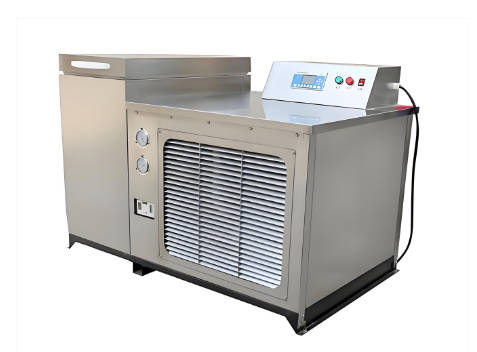
Our climate chambers and freezing cabinets with forced air circulation and programmable temperature profiles accommodate specimens from small drilled cores to full-size masonry units. The following categories represent the most frequently tested items:
- Natural stone products – granite, sandstone, limestone, basalt and marble paving slabs, kerbstones, dimension stone for cladding and restoration work
- Concrete products and precast elements – paving blocks, concrete roof tiles, concrete kerbs, retaining wall blocks, concrete pipes and aerated concrete blocks
- Clay masonry units and clay roof tiles – solid and perforated clay bricks, clay blocks for load-bearing walls, clay pavers and pressed or extruded roof tiles
- Calcium silicate and autoclaved aerated concrete blocks – lightweight masonry units where frost resistance is linked to the pore structure and the production process
- Ceramic tiles and slabs – extruded and dust-pressed ceramic tiles, porcelain stoneware, clinker strips and ceramic façade panels
- Thermal insulation and lightweight building products – EPS, XPS, cellular glass, rigid polyurethane foam and wood-wool boards used in external thermal insulation composite systems
- Asphalt mixtures and road construction materials – asphalt concrete, stone mastic asphalt and porous asphalt cores and laboratory-compacted specimens
- Repair mortars, grouts and protective coatings for concrete – polymer-modified cement mortars, epoxy and polyurethane coatings, surface protection systems and injection grouts
Natural Stone, Concrete Paving and Masonry Units – Freeze-Thaw Cycle and Physical and Mechanical Performance Test According to EN 12371, EN 1338 and EN 772-18
- Determination of frost resistance of natural stone according to ČSN EN 12371: cubic or cylindrical specimens are dried to constant mass, then placed in contact with water and subjected to a freeze-thaw programme in which the temperature in the centre of the stone cycles between -12 °C and +20 °C. A minimum of 48 cycles is applied, and the dynamic modulus of elasticity is measured by the ultrasonic pulse velocity method before cycling and after every 14 cycles. A stone is classified as frost-resistant if the dynamic modulus does not decrease by more than 30 % and if no visible cracking, spalling or delamination occurs. For Czech façades and paving in the higher elevations, the number of cycles is increased to 100 or more to reflect the severe service conditions.
- Compressive strength after freeze-thaw cycling of natural stone according to ČSN EN 1926 and internal procedures: companion specimens are tested in compression – one set in the air-dried condition and one set after the full freeze-thaw regime. The ratio of the mean compressive strength after cycling to the mean compressive strength in the dry condition is reported, and a minimum ratio of 0.80 is typically required by Czech specification for structural stone elements.
- Frost resistance of concrete paving blocks and flags according to ČSN EN 1338 and ČSN EN 1339: the specimens are subjected to a 28‑cycle freeze-thaw test with a saturated sodium chloride solution to simulate the effect of de-icing salts. The mass of scaled material is collected and weighed after each cycle, and the total mass loss must not exceed the permitted values. The residual splitting tensile strength is also determined, providing the physical and mechanical performance after frost and salt attack that determines the product suitability for Czech footpaths, squares and cycle paths.
- Freeze-thaw resistance of calcium silicate and aerated concrete masonry units according to ČSN EN 772-18: the units are conditioned to a defined moisture state and frozen in air to -15 °C, then thawed in water at +20 °C. After 15, 25 or 50 cycles, the compressive strength is determined according to ČSN EN 772-1, and the loss in strength and the presence of cracks, spalls or delamination are recorded. The initial water absorption by capillarity and the dry density are measured before cycling to establish the physical properties that correlate with frost damage.
- Water absorption and open porosity as key indicators of frost susceptibility: before the freeze-thaw cycle, the water absorption at atmospheric pressure and the open porosity are determined according to ČSN EN 13755 and ČSN EN 1936. These values are reported together with the freeze-thaw result, because they allow the construction physicist to predict the frost behaviour of the stone or concrete product in a specific Czech climatic exposure zone.
Clay Bricks, Roof Tiles and Ceramic Products – Freeze-Thaw Cycle and Physical and Mechanical Performance Test for Fired Materials
- Frost resistance of clay roofing tiles and accessories according to ČSN EN 539-2: tiles are saturated with water and exposed to 100 freeze-thaw cycles between +20 °C and -5 °C. After the cycling, the flexural breaking load is determined according to ČSN EN 1024, and the result is compared with the strength of uncycled control specimens. No tile may show a strength loss exceeding 20 %, and the water permeability of the tile after the freeze-thaw test must still comply with the class declared by the manufacturer. Czech roof tile importers rely on this test to demonstrate that their product will survive the repeated frosts on Czech roofs without cracking.
- Frost resistance of clay masonry units according to ČSN EN 772-22 (freeze-thaw method A or B): the bricks are subjected to freeze-thaw cycles in the saturated condition, and the change in ultrasonic pulse velocity and the visual appearance are evaluated. The classification F0, F1 or F2 is assigned depending on the resistance to frost action, and the structural engineer uses this class to select the correct brick for exterior walls, foundations and chimneys in the Czech climate.
- Frost resistance of ceramic tiles and slabs according to ČSN EN ISO 10545-12: a set of tiles is saturated with water and frozen in air to -5 °C, then thawed in water. After a minimum of 100 cycles, the tiles are inspected for crazing, cracks and glaze spalling. The modulus of rupture is determined before and after the freeze-thaw test, and any decrease is reported. This test is mandatory for ceramic tiles sold as frost-proof for outdoor use on Czech balconies, terraces and ventilated façades.
- Capillary water absorption and initial rate of water absorption of clay products: the water absorption coefficient and the initial rate of suction are measured before freeze-thaw cycling according to ČSN EN 772-11. These physical properties are directly linked to the sensitivity of the fired clay body to frost damage, and the Czech clay brick industry uses them to optimise the firing curve and the raw material blend.
Thermal Insulation Products – Freeze-Thaw Cycle and Physical and Mechanical Performance Test According to EN 12091 and EN 12087
- Freeze-thaw resistance of factory-made thermal insulating products according to ČSN EN 12091: specimens of EPS, XPS, cellular glass and rigid polyurethane foam are conditioned to a high moisture content and then subjected to 300 freeze-thaw cycles from +20 °C down to -20 °C. After cycling, the compressive stress at 10 % deformation is measured according to ČSN EN 826, and the change relative to the unconditioned value is reported. For Czech specifiers of inverted roof insulation, this test confirms that the board retains its load-bearing capacity after decades of exposure to freeze-thaw conditions in the wet roof environment.
- Long-term water absorption and its effect on freeze-thaw stability of XPS and cellular glass according to ČSN EN 12087: the insulation board is immersed in water for 28 days, and the water uptake is determined. The wet board is then freeze-thaw cycled, and the compressive strength and the thermal conductivity are remeasured. Any increase in thermal conductivity due to frost-induced cell damage is quantified, and the result is included in the Declarations of Performance under the harmonised product standards.
- Freeze-thaw effect on external thermal insulation composite systems: a complete ETICS mock-up with the base coat, reinforcement mesh and finish coat on an insulating board is exposed to freeze-thaw cycles while being sprayed with water on the surface. The bond strength between the insulation and the substrate, and between the base coat and the insulation, is measured before and after cycling by pull-off tests according to ČSN EN 1542. This freeze-thaw cycle and physical and mechanical performance test provides Czech contractors and system holders with the proof that the ETICS will not delaminate after a severe winter.
Asphalt Mixtures and Road Construction Materials – Freeze-Thaw Damage and Retained Mechanical Performance
- Water sensitivity and retained indirect tensile strength of asphalt mixtures after freeze-thaw conditioning according to ČSN EN 12697-12 (Method A): a set of Marshall or gyratory-compacted cylindrical specimens is divided into two subsets. One subset is stored dry at room temperature, while the other is saturated with water, frozen at -18 °C for a minimum of 16 hours and then thawed in a water bath at +25 °C. The indirect tensile strength of both subsets is measured according to ČSN EN 12697-23, and the ratio of the wet‑freeze‑thaw strength to the dry strength, expressed as the Indirect Tensile Strength Ratio, is calculated. A minimum ITSR of 80 % is typically required for asphalt surface courses on Czech motorways and regional roads.
- Stiffness modulus and fatigue resistance after freeze-thaw conditioning: the stiffness modulus of the asphalt mixture is measured according to ČSN EN 12697-26 on specimens that have been subjected to multiple freeze-thaw cycles. The decrease in stiffness and the shift in the fatigue curve are determined, providing data for the analytical pavement design of heavily trafficked roads in the Czech Republic, where frost heave and thaw weakening are the dominant pavement distress mechanisms.
- Frost resistance of aggregates used in asphalt and concrete by the magnesium sulfate soundness test according to ČSN EN 1367-2: although not a direct freeze-thaw test, the magnesium sulfate test induces crystallisation pressures that simulate the action of ice and is correlated with the loss of mechanical performance of the aggregate after freeze-thaw exposure. The test is routinely performed on Czech quarried aggregates intended for road base and concrete.
Repair Mortars, Grouts and Surface Protection Systems – Combined Freeze-Thaw and Bond Strength Testing
- Freeze-thaw cycling with de-icing salt and bond strength measurement according to ČSN EN 13687-1: a repair mortar or a concrete surface protection system is applied to a concrete substrate, and pull-off test dollies are glued to the surface. The assembly is immersed in a saturated sodium chloride solution and subjected to 50 freeze-thaw cycles. The bond strength after cycling is measured according to ČSN EN 1542, and the value is compared with the bond strength of uncycled control specimens. The product is deemed frost-resistant if the bond strength does not fall below the minimum specified in the Czech national application document for the repair standard ČSN EN 1504.
- Capillary water absorption and freeze-thaw resistance of concrete repair products according to ČSN EN 13057: the capillary absorption coefficient is determined before and after freeze-thaw cycling, and the increase in water uptake is used as an indicator of microcracking in the repair layer. This is particularly important for bridge deck repairs on Czech highways, where the de-icing salt solution penetrates microcracks and accelerates corrosion of the reinforcement.
- Dynamic modulus of elasticity monitoring during freeze-thaw cycling of polymer-modified mortars: prismatic specimens are instrumented with ultrasonic transducers, and the change in the dynamic elastic modulus is recorded continuously during the freeze-thaw programme. The durability factor is calculated, and the test is terminated when the relative dynamic modulus falls below a prescribed threshold, usually 80 % of the initial value. This method, based on the principles of ASTM C666, provides an early and sensitive indication of frost damage development.
Report Acceptance and Regulatory Compliance for the Czech Republic
All measurements performed within our freeze-thaw cycle and physical and mechanical performance test programme are executed under the fully accredited scope of our ISO/IEC 17025 quality management system. Each test report that carries the ILAC mark is therefore automatically recognised by the Czech Trade Inspection Authority, local building authorities, the Road and Motorway Directorate of the Czech Republic and all notified bodies in the European Union. For Czech quarriers, concrete plants, brick and tile manufacturers, asphalt producers and repair material suppliers, the report constitutes legally robust evidence that the product meets the frost resistance requirements of the applicable harmonised product standards and the Czech national annexes to the Eurocodes. The documentation can be directly used to issue Declarations of Performance under the Construction Products Regulation, to support CE marking, to obtain national technical certificates from the Technical and Test Institute for Construction Prague, and to resolve commercial disputes concerning frost damage of building materials and components.