Heat Dissipation Effect Testing Service – Accredited Thermal Performance Evaluation for Electronics and Mechanical Systems on the Czech Market
Our internationally accredited laboratory provides a dedicated heat dissipation effect testing service that delivers the independent, high-precision thermal data Czech manufacturers, importers and design engineers require to validate the cooling performance of electronic enclosures, power modules, LED luminaires, automotive components and industrial heat exchangers. All measurements are performed under the rigorous framework of ISO/IEC 17025, and every report bearing the ILAC mark is unconditionally accepted by the Czech Trade Inspection Authority, customs offices and all notified bodies across the European Union. The heat dissipation effect testing service quantifies the thermal resistance, the junction-to-ambient temperature rise, the heat pipe or vapor chamber transport capacity, and the efficiency of forced and natural convection cooling systems. For a Czech producer of frequency converters, a supplier of LED street lights to Prague municipalities, or an importer of high-performance CPU coolers, this service provides the legally robust proof that the product will remain within safe operating temperatures under the most demanding Central European climatic conditions.
Product Samples We Regularly Subject to Heat Dissipation Effect Testing
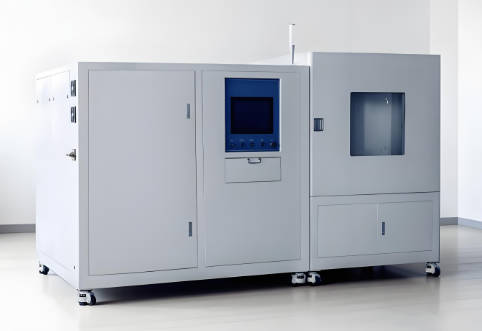
Our wind tunnels, guarded hot plates, thermal interface material testers and infrared thermography equipment can characterise components from a few millimetres to complete rack-level assemblies. The following categories represent the most frequently tested items:
- Heat sinks and cold plates – extruded aluminium, bonded-fin, skived-fin and liquid-cooled plates for power semiconductors and servers
- Heat pipes and vapor chambers – sintered, grooved and mesh-type heat pipes, and flat vapor chambers for smartphones, notebooks and 5G base stations
- LED modules, luminaires and street lights – complete LED fixtures, COB arrays and driver-integrated modules where junction temperature determines luminous efficacy and lifetime
- Automotive electronic control units and power stages – engine ECUs, transmission controllers, DC-DC converters and on-board chargers with passive or active cooling
- Industrial power modules and converters – IGBT modules, thyristor stacks, frequency inverters and uninterruptible power supplies
- Enclosures and sealed cabinets – outdoor telecom cabinets, electrical junction boxes and IP-rated housings with internal heat sources
- Thermal interface materials – gap fillers, phase-change materials, thermal greases, graphite sheets and adhesive tapes
- Consumer electronics and wearables – smartphones, tablets, laptop thermal modules and smart watches where skin temperature limits apply
Steady-State Thermal Resistance and Junction Temperature Measurement – JEDEC JESD51 and IEC Standards
- Junction-to-ambient thermal resistance RθJA according to JEDEC JESD51-1 and JESD51-2: the semiconductor device or LED is mounted on a standardised or customer-specific test board inside a still-air enclosure of defined volume. A known heating power is dissipated in the junction, and the junction temperature Tj is measured using the temperature-sensitive electrical parameter, while the ambient temperature Ta is recorded by multiple thermocouples. The steady-state RθJA in K/W is calculated, and the result is compared with the manufacturer's datasheet value. Czech importers of integrated circuits and power transistors rely on this test to verify the thermal specifications of the purchased components.
- Junction-to-case thermal resistance RθJC according to JEDEC JESD51-14: the device is pressed against a temperature-controlled cold plate, and the junction-to-case thermal resistance is determined by the transient dual-interface method. The separation of the thermal path between the junction and the case surface yields a value that is independent of the external cooling solution, and it is the preferred metric for comparing semiconductor packages from different suppliers.
- Thermal resistance of LED modules and luminaires according to CIE 127 and ČSN EN 13032-4: the LED junction temperature is determined from the forward voltage method, and the thermal resistance from the junction to the designated measurement point on the luminaire housing is reported. For Czech municipal lighting projects, this value is used to predict the lumen maintenance and to guarantee that the useful life L80B10 will be met under the average night-time temperatures of the Czech Republic.
- Thermal impedance and structure-function analysis: a transient thermal measurement is performed by recording the cooling curve of the device after a power step. The structure function derived from the time-constant spectrum identifies the thermal resistance and capacitance of each layer in the heat path – die attach, substrate, solder, baseplate and heat sink – allowing the design engineer to pinpoint the bottleneck in the heat dissipation chain.
Heat Sink and Forced Convection Cooling Performance – Wind Tunnel Testing According to ISO 5801 and Customer Procedures
- Thermal resistance of a heat sink as a function of airflow velocity: the heat sink is mounted on a dummy heater with a known power input and placed in a wind tunnel. The airflow velocity is varied from natural convection up to 10 m/s, and the temperature rise of the heater surface above the inlet air is recorded. The thermal resistance curve Rsa = f(v) is reported, and the pressure drop across the heat sink is measured simultaneously. Czech designers of air-cooled inverters and servo drives use this curve to select the optimum fan and to minimise the system power consumption.
- Natural convection cooling performance of extruded and die-cast enclosures: the complete enclosure with internal heat sources is suspended in a temperature-controlled room, and the surface temperature distribution is mapped by infrared thermography and contact thermocouples. The effective heat transfer coefficient and the hotspot temperature are determined, and the results are checked against the limits for touchable surfaces specified in ČSN EN 60335-1 and the relevant product safety standards.
- Liquid cold plate and liquid cooling system characterisation: the cold plate is fed with a water-glycol mixture at a controlled inlet temperature and flow rate. The heat dissipation capacity in watts, the thermal resistance and the pressure drop are measured over the full flow range. This heat dissipation effect testing service provides the data needed by Czech integrators of liquid-cooled server racks and high-power laser systems to specify the pump and the chiller.
- Thermal performance of heat pipes and vapor chambers under different orientations: the heat pipe is heated at one end and cooled at the other, and the effective thermal conductivity or the maximum heat transport capacity Qmax is measured with the evaporator above, below or at the same level as the condenser. The test is performed at several operating temperatures to establish the dry-out limit, and the data are used by Czech notebook and telecom equipment manufacturers to validate the thermal design.
Thermal Interface Material Characterisation – Thermal Conductivity and Thermal Impedance According to ASTM D5470 and ISO 22007
- Thermal resistance and apparent thermal conductivity of TIMs according to ASTM D5470 (steady-state method): the material specimen is clamped between a heated meter bar and a cooled meter bar at a controlled pressure and thickness. The temperature gradient across the specimen is measured, and the thermal resistance in K·mm²/W and the thermal conductivity in W/(m·K) are calculated. The test is performed at several bond-line thicknesses and clamping pressures, providing the data that Czech assemblers of power modules need to specify the correct TIM and the correct mounting torque.
- Thermal conductivity of thermal greases, pastes and phase-change materials with the laser flash method according to ISO 22007-4: a thin layer of paste is sandwiched between two metal discs, and the thermal diffusivity is measured by the laser flash technique. The thermal conductivity is then calculated from the diffusivity, the density and the specific heat capacity. This method is especially suited to very thin, high-performance thermal greases used between processors and heat sinks.
- Thermal impedance of TIMs under cyclic load and temperature ageing: the specimen is subjected to temperature cycles and mechanical pressure cycles that simulate the start-up and shut-down of power electronics. The thermal impedance is re-measured at intervals, and the degradation due to pump-out, dry-out or oxidation of the grease is quantified. Czech manufacturers of traction inverters use this data to predict the service interval for re-greasing.
- Dielectric strength of thermal interface materials combined with thermal resistance: for electrically insulating gap fillers and pads, the breakdown voltage is measured according to ASTM D149, and the thermal resistance is measured on the same specimen. The results confirm that the material can provide both electrical isolation and a low thermal resistance path, as required for mounting IGBT modules directly to grounded heat sinks.
Automotive, Battery and Power Electronics – Heat Dissipation Effect Testing for Harsh Environments
- Thermal performance of on-board chargers, DC-DC converters and traction inverters under elevated ambient conditions: the unit is operated at its rated power inside a climatic chamber set to the maximum ambient temperature specified for the application, typically 85 °C for engine-mounted components or 65 °C for cabin electronics. The temperatures of the critical semiconductors, capacitors and magnetic components are monitored, and the derating curve of the unit is established. This heat dissipation effect testing service is used by Czech automotive tier‑1 suppliers to release power electronics for series production.
- Battery pack thermal management and heat dissipation mapping: a battery module or a complete pack is charged and discharged at various C‑rates while the temperature of each cell is measured by thermocouples or fibre-optic sensors. The heat generation rate per cell, the temperature gradient across the module and the effectiveness of the cooling plate or air duct are quantified, and the results are used to validate the thermal model of the battery management system.
- Heat dissipation of outdoor telecom and renewable energy enclosures under solar load: the enclosure is placed in a solar simulation chamber or under a bank of infrared lamps that replicate the solar irradiance of a bright Czech summer day. The internal temperature rise above the external ambient is measured, and the adequacy of the ventilation, shading and heat exchanger is assessed. The test report is used to demonstrate that the equipment will not exceed the maximum internal temperature specified by the electronics manufacturer.
Report Acceptance and Regulatory Compliance for the Czech Republic
All measurements performed within our heat dissipation effect testing service are executed under the fully accredited scope of our ISO/IEC 17025 quality management system. Each test report that carries the ILAC mark is therefore recognised automatically by the Czech Trade Inspection Authority, the Technical Inspection of the Czech Republic, customs offices and all notified bodies in the European Union. For Czech electronics producers, LED luminaire manufacturers, automotive suppliers and importers of cooling components, the report constitutes legally robust evidence that the thermal design meets the requirements of the applicable product safety standards and the declared performance specifications. The documentation can be directly used to support CE marking under the Low Voltage Directive and the Electromagnetic Compatibility Directive, to compile the technical file for Ecodesign and energy labelling regulations, and to resolve commercial disputes concerning the thermal performance of delivered goods.