Hemp Rope Breaking Strength Test – Accredited Tensile Evaluation of Natural Fibre Ropes for the Czech Market
Our internationally accredited laboratory provides a dedicated hemp rope test for breaking strength that delivers the precise, repeatable force data Czech importers, hardware distributors, construction firms and packaging manufacturers need to verify the load capacity of natural fibre ropes. All tests are performed within our ISO/IEC 17025 quality management system, and every report bearing the ILAC mark is unconditionally accepted by the Czech Trade Inspection Authority, customs offices and notified bodies across the European Union. Hemp rope remains widely used in agriculture, gardening, decorative rigging, theatre staging, building site lashing, and industrial packaging. Knowing the exact breaking force – and how it changes with knotting, moisture and ageing – is essential for safe working loads and for demonstrating that the product meets the declared strength required by the purchaser.
Product Samples We Regularly Subject to the Hemp Rope Breaking Strength Test
We receive hemp ropes in a wide variety of diameters, constructions and finishes. The following categories represent the most frequently tested items:
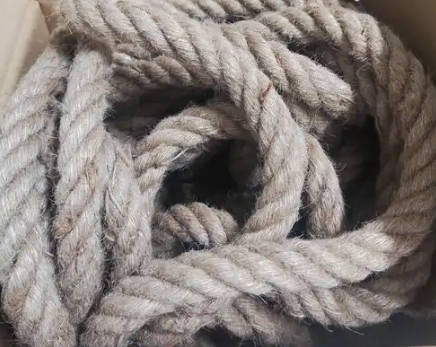
- Natural hemp ropes for general service – three-strand twisted, four-strand and braided hemp ropes ranging from 4 mm to 40 mm diameter
- Tarred and waxed hemp ropes – waterproofed variants used in outdoor building work, scaffolding lashings and marine applications
- Hemp packaging twine and baler twine – fine-diameter ropes and twines for tying, bundling and agricultural baling
- Hemp ropes with end splices, thimbles and loops – ready-made assemblies where the termination is as critical as the rope itself
- Decorative and theatrical hemp ropes – polished, coloured hemp lines used in shopfitting, exhibitions and stage rigging where a guaranteed minimum strength is still required
- Hemp rope after outdoor exposure or artificial ageing – samples taken from storage or deliberately weathered to evaluate the loss of strength over time
Tensile Breaking Strength of Hemp Ropes According to EN ISO 2307 and EN 1261
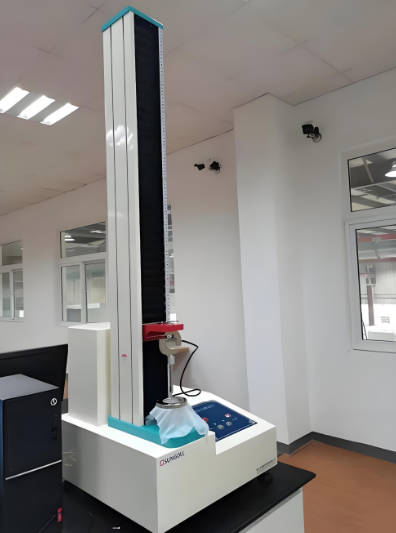
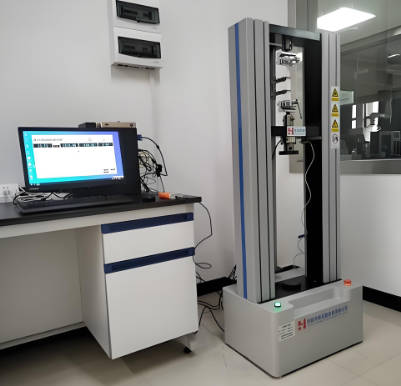
- Direct tensile test to determine the breaking force of a hemp rope according to EN ISO 2307: a sufficient length of rope is conditioned at 20 °C and 65 % relative humidity until it reaches equilibrium. The specimen is mounted between capstan-type or wedge-socket grips that prevent slippage and local crushing, and it is pulled at a constant rate of extension until rupture. The maximum force recorded, expressed in kilonewtons, is the breaking strength. The elongation at break and the mode of fracture – whether the fibres tear progressively or the strands fail abruptly – are also documented. The test is performed on a calibrated tensile testing machine with a force transducer traceable to national standards.
- Compliance testing against the strength requirements of EN 1261 for hemp ropes: EN 1261 specifies the minimum breaking strength for three-strand twisted hemp ropes of various diameters, from 6 mm to 40 mm. We verify that the measured breaking force meets or exceeds the tabulated value for the declared diameter class. The result is compared with the manufacturer's grade, and any non-conforming rope is immediately flagged for the Czech importer.
- Testing at different gauge lengths to account for statistical weak-link effects: for a given hemp rope, the breaking strength depends slightly on the test length because natural fibres contain random defects. We offer tests at standardised gauge lengths of 300 mm, 500 mm and 1 000 mm, and we report the mean breaking force and the coefficient of variation. This data is used by Czech buyers to derive a safe working load with an appropriate safety factor.
- Determination of the linear density and calculation of the specific strength: the rope's mass per unit length is determined by weighing a known length in the conditioned state. The specific strength, expressed as centinewtons per tex, is calculated by dividing the breaking force by the linear density. This parameter allows an objective comparison between hemp ropes of different constructions and between hemp and other natural fibres such as sisal or manila.
Knot Breaking Strength, Splice Efficiency and Termination Testing of Hemp Ropes
- Breaking strength of a knotted hemp rope according to the principles of EN ISO 2307: a standardised overhand knot or figure-eight knot is tied in the middle of the specimen, and the rope is pulled to failure. The knot breaking strength is expressed as a percentage of the unknotted breaking strength. For typical three-strand hemp rope, this efficiency is usually between 50 % and 65 %. The result is crucial for Czech users who will tie off the rope in the field, and we report both the absolute force in kN and the efficiency factor.
- Eye-splice and loop strength test: a rope assembly containing a professionally made eye splice or a pressed metal ferrule is tested with the loop placed over a smooth pin of defined diameter. The force at which the splice pulls out or the rope breaks is recorded, and the splice efficiency is calculated. For imported hemp slings sold in the Czech hardware trade, this test validates the workmanship of the termination.
- Thimble and ferrule securement testing: if the hemp rope is supplied with a steel thimble and a swaged or pressed ferrule, the assembly is tested in a jig that simulates the actual loading angle. The test verifies that the ferrule does not slip at loads below the rope's breaking strength and that the rope fails inside the free length, not at the termination.
Influence of Moisture, Conditioning and Damp Exposure on Hemp Rope Breaking Strength
- Breaking strength after water immersion and wet-condition testing: hemp fibres absorb moisture readily, which can reduce or, in some cases, temporarily increase strength depending on the fibre state. We immerse the rope in water for 24 hours and test it while still wet, comparing the result with the conditioned dry value. This simulates the behaviour of a hemp rope left out in the rain on a Czech construction site.
- Effect of repeated wetting and drying cycles: the rope is subjected to several cycles of full immersion followed by air drying at 30 °C. The breaking strength is measured after each drying cycle to determine whether irreversible degradation, such as fungal attack or fibre embrittlement, has occurred. This test is frequently requested by Czech horticultural suppliers and outdoor event companies.
- Strength retention after prolonged exposure to humidity without ventilation: hanks of hemp rope are stored in a sealed atmosphere at 30 °C and 90 % relative humidity for up to 28 days, then reconditioned and tested. The loss of strength relative to a freshly conditioned sample is reported, and the risk of mould-induced degradation is assessed visually.
- Artificial weathering and UV exposure combined with moisture: for hemp ropes used outdoors in the Czech Republic, we expose specimens to alternating cycles of UV radiation, water spray and condensation according to EN ISO 4892-2. The residual breaking strength is measured after 500, 1 000 and 2 000 hours, and the time to reach 50 % of the original strength is estimated. This allows importers to set a realistic service life for their products.
Report Acceptance and Regulatory Compliance for the Czech Republic
All hemp rope tests for breaking strength described above are performed within the fully accredited scope of our ISO/IEC 17025 quality management system. Every test report carrying the ILAC mark is therefore recognised automatically by the Czech Trade Inspection Authority, customs authorities and all notified bodies in the European Union. For Czech importers, wholesalers and industrial users of hemp rope, these reports constitute legally robust evidence that the product meets the declared strength and complies with the applicable European standards, including EN 1261. The documentation can be directly used for supplier qualification, for demonstrating conformance with customer specifications, and as a reliable defence in commercial disputes or product liability claims concerning the load-bearing capacity of natural fibre ropes.