Ice Collision Experiment – Accredited Ice Ball Impact and Hail Resistance Evaluation for the Czech Market
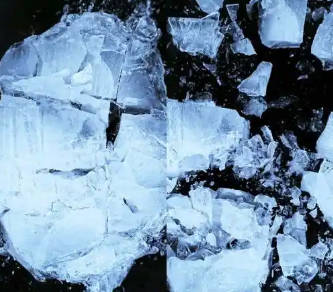
Our internationally accredited laboratory delivers a specialist ice collision experiment service that provides Czech automotive manufacturers, photovoltaic panel importers, building envelope suppliers and aerospace component producers with the independent, traceable data they need to certify resistance to hail and free-flying ice projectiles. All tests are performed under the rigid framework of ISO/IEC 17025, and every report bearing the ILAC mark is unconditionally accepted by the Czech Trade Inspection Authority, local building authorities, the Road and Motorway Directorate of the Czech Republic and all notified bodies across the European Union. A precisely controlled ice collision experiment simulates the impact of a hailstone or a detached piece of ice striking the surface of a car roof, a solar panel, a skylight or an aircraft radome at the terminal velocity reached in a severe Central European thunderstorm. By firing ice balls of defined diameter, mass and temperature from a pneumatic or gas gun and measuring the resulting deformation, cracking, functional loss and water penetration, we give Czech designers, importers and insurance assessors the complete damage‑tolerance record they need to demonstrate conformity with EU product regulations and to stand behind their warranty commitments.
Product Samples We Regularly Subject to the Ice Collision Experiment
The climate‑controlled impact chambers and high‑speed video equipment in our facility accommodate complete assemblies, test coupons and material specimens. The following categories represent the most frequently tested items:
- Automotive body panels and exterior parts – steel and aluminium hoods, roof skins, door outer panels, boot lids, plastic fenders, grilles, mirror housings and bumpers
- Automotive glazing and lighting – laminated windscreens, tempered side and rear windows, panoramic glass roofs, polycarbonate headlamp lenses and rear‑lamp covers
- Photovoltaic modules and solar collectors – monocrystalline and polycrystalline glass‑faced PV panels, thin‑film flexible modules and evacuated‑tube solar thermal collectors
- Building envelope and roofing components – skylight domes, polycarbonate multiwall sheets, roof windows, flat‑roof membrane assemblies, clay and concrete roof tiles, fibre‑cement slates and metal standing‑seam panels
- Façade elements and architectural glass – insulated glass units, laminated safety glass, structural glazing panels and ventilated ceramic or stone rainscreen elements
- Aerospace and defence components – radomes, wing leading edges, rotor blades, propeller blades, helicopter windscreens and uncrewed aerial vehicle airframes
- Outdoor equipment enclosures – telecommunication cabinets, electrical junction boxes, air‑conditioning outdoor unit covers and charging station housings
Automotive and Transport Applications – Ice Collision Experiment Based on OEM Damageability Standards
- Simulated hail impact on body panels and painted surfaces according to automotive OEM specifications: ice balls of 25 mm, 40 mm or 50 mm diameter, conditioned to -20 °C, are propelled at velocities up to 35 m/s onto horizontal and angled body panels. The indentation depth, the diameter of the plastically deformed zone and the paint cracking pattern are measured and photographed. For Czech car manufacturers, the ice collision experiment defines the threshold impact energy above which a panel must be repaired or replaced, supporting the vehicle damageability rating and the insurance classification.
- Ice impact on automotive glazing for residual visibility and structural integrity: laminated windscreens and tempered side windows are struck by ice balls at the velocities specified for the A‑zone and B‑zone of the screen. The post‑impact optical distortion, the number and length of cracks, and the ability of the glass to retain the occupant inside the vehicle are assessed. The results are compared with the requirements of ECE R43 and the internal breakage‑pattern criteria of the manufacturer.
- Hail simulation on plastic exterior components at sub‑zero ambient temperatures: the component is cooled to -30 °C together with the ice projectile, and the impact is delivered within a cold chamber. The tendency of polypropylene, ABS and polycarbonate parts to shatter or to exhibit brittle fracture at low service temperatures is evaluated. This ice collision experiment is requested by Czech tier‑1 suppliers to validate the cold‑climate performance of grilles, bumpers and mirror housings.
- Repeated low‑energy ice impacts for the assessment of paint chipping and delamination: a stream of small ice pellets (5–10 mm) is directed at the leading surfaces of a vehicle body to reproduce the effect of driving through a hailstorm at highway speed. The number and size of paint chips per unit area are counted, and the area of exposed substrate is measured. The test serves as a basis for the corrosion‑protection warranty offered on the Czech market.
Photovoltaic Modules and Solar Collectors – Ice Collision Experiment According to IEC 61215 and EN 13583
- Hail resistance test of PV modules according to ČSN EN 61215‑2 (IEC 61215‑2): a frozen ice sphere of 25 mm diameter and a mass of 7.53 g is fired at a velocity of 23 m/s onto the centre and the corner of the module glass. The module is inspected visually, by electroluminescence and by a wet‑leakage current test after the impact. No cell cracks, glass breakage or loss of insulation resistance are permitted. This ice collision experiment is mandatory for the certification of PV modules intended for installation in the hail‑prone regions of South Moravia and the Czech Highlands.
- Extended hail testing for larger hailstones according to Swiss VKF 1612 and customer requirements: ice spheres of up to 50 mm diameter and an impact energy of up to 15 J are fired at the module to determine the hail class (HW1 to HW5). Czech insurance companies accept this classification for the assessment of the storm‑damage risk of large‑scale solar farms and for the calculation of the deductible.
- Impact test on solar thermal collectors and evacuated tubes: the glass tube of an evacuated‑tube collector or the glass cover of a flat‑plate collector is impacted by a 25 mm ice ball. The resistance to glass breakage and to loss of vacuum is verified, and the thermal output is measured after the impact to detect any deterioration of the selective absorber coating caused by glass splinters.
- Static load test following hail impact for combined stress validation: after the ice impact, the module is subjected to a static mechanical load of 2 400 Pa to simulate the combination of hail damage and snow load. The test ensures that a module dented by hail can still withstand a Czech winter with heavy snowfall on the roof.
Building Envelopes, Roofing and Glazing – Ice Collision Experiment for Hail Resistance According to EN 13583 and ETAG 034
- Hail impact test on roof tiles, slates and fibre‑cement sheets according to ČSN EN 13583: a 20 mm steel ball or a 25 mm ice ball is dropped or fired onto the exposed face of the roofing product from a height that produces an impact energy of 3 J. After five successive impacts on the same specimen, the product must show no cracks, no perforation and no detachment of the surface coating. The water permeability after the impact is verified, and the product is classified into a hail resistance class for use in the Czech climatic zones.
- Skylight and rooflight dome resistance to ice collision: a complete skylight assembly, including the acrylic or polycarbonate dome and the upstand, is impacted by an ice ball at the centre and at the corner. The transparency, the permanent deflection and the continued weathertightness are recorded. For Czech factories and warehouses, this experiment provides the evidence that the skylights will survive a summer hailstorm without collapsing or leaking.
- External thermal insulation composite systems and façade panels under ice impact: a full‑scale ETICS mock‑up or a ventilated rainscreen panel is struck by an ice projectile to evaluate the resistance of the render, the reinforcement mesh and the insulation layer to perforation and delamination. The pull‑off bond strength is measured before and after impact according to ČSN EN 1542, and any reduction is reported.
- Laminated safety glass and insulating glass units for overhead glazing: the glass is impacted by an ice ball at the centre of the pane and at the edge, and the residual load‑bearing capacity is tested by applying a uniformly distributed load after the impact. The experiment verifies that a glass roof in a Prague shopping gallery will not fall even if it is cracked by hail, as required by the Czech national annex to EN 1991‑1‑4.
Aerospace, Defence and Outdoor Equipment – Ice Collision Experiment for Foreign Object Damage and Environmental Qualification
- Ice ball impact on radomes and antenna covers according to ASTM F320 and RTCA DO‑160: a 25 mm or 40 mm ice ball is fired at the radome skin at the velocity corresponding to the maximum aircraft speed in icing conditions. The structural integrity, the transmission loss of the antenna signal and the water ingress after the impact are evaluated. This ice collision experiment qualifies radomes for the Czech Air Force and for civilian aircraft operating from regional airports.
- Propeller and rotor blade leading‑edge ice impact simulation: ice projectiles of various sizes are fired at the leading edge of a composite or metal propeller blade to simulate a blade striking an accumulated ice block detached from the hub or the airframe. The damage size and the residual fatigue strength are measured, and the results are used in the damage‑tolerance analysis for Czech light‑sport and general‑aviation aircraft.
- Outdoor electronic equipment enclosures and charging stations: the enclosure is cooled to -20 °C and impacted by an ice ball to simulate a flying piece of ice dislodged from a passing vehicle or a building roof. The enclosure must not crack, and the IP protection rating must be maintained after the impact, as verified by a subsequent dust and water ingress test according to ČSN EN 60529.
- Wind turbine blade leading‑edge erosion and impact by ice fragments: ice projectiles are fired at a representative blade section to measure the damage to the gelcoat and the composite substrate. The experiment supports the selection of leading‑edge protection tapes and coatings for wind turbines sited on the ridges of the Ore Mountains and the Jeseníky range.
Report Acceptance and Regulatory Compliance for the Czech Republic
All tests performed within our ice collision experiment programme are executed under the fully accredited scope of our ISO/IEC 17025 quality management system. Each report that carries the ILAC mark is therefore automatically recognised by the Czech Trade Inspection Authority, local building authorities, the Road and Motorway Directorate of the Czech Republic and all notified bodies in the European Union. For Czech automotive part suppliers, solar energy installers, building product manufacturers and aerospace engineering firms, the report constitutes legally robust evidence that the tested component or assembly meets the ice impact and hail resistance requirements of the applicable harmonised product standards and the Czech national annexes to the Eurocodes. The documentation can be directly used to support CE marking, to issue Declarations of Performance under the Construction Products Regulation, to obtain national technical certificates, and to resolve insurance and warranty disputes arising from hailstorm damage.