Original Filtration Efficiency Testing Service – Accredited Initial and Fractional Efficiency Measurement for Air Filters and Filter Media on the Czech Market
Our laboratory delivers a specialist original filtration efficiency testing service that allows Czech filter manufacturers, cleanroom operators, HVAC system designers and vehicle cabin air filter importers to know exactly how a filter medium or a complete filter element performs when it is brand new and unloaded with dust. All measurements are executed within our ISO/IEC 17025 accreditation, and every report bearing the ILAC mark is automatically accepted by the Czech Trade Inspection Authority, customs offices and the notified bodies of the European Union. The original, or initial, filtration efficiency is the most fundamental filter performance characteristic – it determines the clean-air delivery rate, the protection of downstream components and the compliance of the filter with the energy classification and health-protection standards enforced in the Czech Republic. Our service covers general ventilation filters, HEPA and ULPA panels, automotive cabin filters, respiratory protective masks and the flat-sheet media from which these products are made.
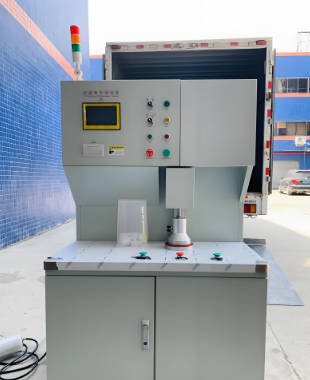
Product Samples We Regularly Subject to Original Filtration Efficiency Testing
Our test rigs accept complete filters, filter cartridges and flat media specimens. The following categories represent the most frequently evaluated items:
- Panel and bag filters for general ventilation – glass-fibre and synthetic pocket filters, rigid panel filters and compact filters used in air handling units across Czech commercial buildings
- High-efficiency particulate air and ultra-low penetration air filters – HEPA H13–H14 and ULPA U15–U17 filters for pharmaceutical cleanrooms, hospital operating theatres and nuclear containment zones
- Automotive cabin air filters – particle filters and combined particle-and-charcoal filters for passenger cars, buses and agricultural machinery operated in the Czech Republic
- Respiratory protective device filters and masks – filtering half-masks of classes FFP1, FFP2 and FFP3, and the filter materials from which they are assembled
- Vacuum cleaner and appliance filters – exhaust filters, motor-protection filters and cyclonic post-filters from household and industrial vacuum units
- Filter media rolls and flat sheets – meltblown, spunbond, nanofibre and glass-fibre media supplied to Czech converters for the fabrication of filters and masks
- Gas turbine and compressor intake filters – static and pulse-cleaned filter cartridges for power generation and oil-and-gas installations
General Ventilation Filters – Original Filtration Efficiency Testing According to ISO 16890
- Fractional efficiency and classification according to ČSN EN ISO 16890-1 and ISO 16890-2: a complete filter or a representative media sample is challenged with a test aerosol of DEHS or KCl. The particle number concentration is measured with an optical particle counter in the size range 0.3 µm to 10 µm, both upstream and downstream of the filter. The original filtration efficiency for three size fractions – ePM1, ePM2.5 and ePM10 – is calculated and used to assign the filter class (e.g., ePM1 70 % or ePM2.5 50 %). This is the only valid classification for filters placed on the EU market, and Czech building services engineers rely on it to comply with the ventilation requirements of ČSN EN 16798-3.
- Electrostatic discharge treatment and reporting of the minimum efficiency: for filters employing electret media, the original efficiency is measured after a complete discharge procedure as mandated by ISO 16890-4. By reporting both the untreated and the discharged efficiency, we provide the Czech purchaser with a realistic picture of how the filter will perform after the electrostatic charge has dissipated during the first weeks of operation.
- Measurement of initial pressure drop at the rated airflow: alongside the original filtration efficiency, the static pressure difference across the clean filter is recorded and reported in pascals. This value is the basis for calculating the annual energy consumption of the air handling unit, which is an integral part of the ecodesign and energy labelling documentation for ventilation systems in the Czech Republic.
HEPA, ULPA and Cleanroom Filters – Original Filtration Efficiency Testing According to EN 1822 and ISO 29463
- Determination of the most penetrating particle size and the original efficiency at MPPS according to ČSN EN 1822-1 and ISO 29463-1: a sheet of filter medium or a complete filter is scanned with a monodisperse aerosol. The particle size at which the filter shows the lowest efficiency – the MPPS – is identified, and the original filtration efficiency at that size is reported. For an H14 filter, the minimum efficiency at MPPS must be ≥ 99.995 %. The result is the single most important figure for certifying a filter for use in a Czech pharmaceutical aseptic processing area.
- Leak detection by scan testing according to ČSN EN 1822-4 and ISO 29463-4: the entire face area of the installed filter, including the seal between the filter and the housing, is scanned with a discrete-particle counter while a challenge aerosol is introduced upstream. Any local penetration exceeding the allowable limit, typically 0.01 % for HEPA filters, is pinpointed and documented. This original filtration efficiency testing service provides the installation certification required by the Czech State Institute for Drug Control and the ISO 14644 cleanroom series.
- Original efficiency of ULPA filters for unidirectional flow: filters intended for ISO Class 3 or better cleanrooms are tested under conditions that replicate the laminar flow velocity of the ceiling grid. The original efficiency is verified to be ≥ 99.9995 % at MPPS, confirming that the filter can meet the stringent particulate limits demanded by Czech semiconductor and optics manufacturers.
Automotive, Respiratory and Appliance Filters – Original Filtration Efficiency for Niche Applications
- Original particle filtration efficiency of automotive cabin filters according to ISO 11155-1: a complete cabin filter element is mounted in a test duct, and a polydisperse aerosol is introduced. The upstream and downstream concentrations are measured, and the original gravimetric and fractional efficiencies are reported. For Czech importers and aftermarket suppliers, this test verifies the protection of vehicle occupants against brake dust, tyre particles and pollen during Czech spring and summer.
- Original filtration efficiency of respiratory protective filter materials according to ČSN EN 13274-7 and ČSN EN 149: a flat specimen of the mask material is challenged with a sodium chloride aerosol at a flow rate that corresponds to the breathing pattern. The penetration is measured with a flame photometer, and the original filtration efficiency is calculated. To claim FFP2 classification, the maximum penetration must not exceed 6 %; for FFP3, 1 %. This test is an indispensable part of the EU type-examination for personal protective equipment sold to Czech industrial and healthcare users.
- Original efficiency of vacuum cleaner exhaust and motor filters according to ČSN EN 60312-1 and IEC 62885-2: the filter is installed in the test equipment, and a standardized loading of test dust is applied while the particle count in the exhaust is continuously monitored. The original filtration efficiency determined before any dust cake has formed is used to calculate the dust re-emission class (A to G) that appears on the energy label of every vacuum cleaner placed on the Czech retail market.
Filter Media and Flat-Sheet Material – Original Filtration Efficiency Testing for Product Development and Quality Control
- Original efficiency and pressure drop of a flat-sheet medium according to ISO 29463-2 and internal procedures: a circular specimen of 100 mm or 150 mm diameter is clamped in a test cell, and the original filtration efficiency is measured with a DEHS or KCl aerosol at a range of face velocities. The efficiency-velocity curve and the specific pressure drop in Pa·s/m are reported. This data is used by Czech nonwoven producers to tune the fibre diameter, basis weight and electrostatic charging of their media.
- Original efficiency of nanofibre and membrane laminates: for advanced media containing a nanofibre layer, the original filtration efficiency is determined at both high and low aerosol loads to detect any micro-perforations or carrier-layer defects. The integrity of the nanofibre web is critical to the performance of HVAC bag filters and gas turbine intake filters that Czech manufacturers export to demanding markets.
- Fractional efficiency of filter media for oil-mist and coalescing applications: a liquid aerosol is generated, and the original efficiency for droplet sizes from 0.01 µm to 5 µm is measured using a scanning mobility particle sizer and an optical particle counter. The results are used to specify coalescing filter cartridges for compressed air and natural gas installations in the Czech process industry.
Report Acceptance and Regulatory Compliance for the Czech Republic
All measurements performed within our original filtration efficiency testing service are executed under the fully accredited scope of our ISO/IEC 17025 quality management system. Each test report that carries the ILAC mark is therefore recognised automatically by the Czech Trade Inspection Authority, the Czech Environmental Inspectorate, customs offices and all notified bodies in the European Union. For Czech filter manufacturers, HVAC contractors, cleanroom operators and importers of personal protective equipment, the report constitutes legally robust evidence that the filter or medium meets the applicable efficiency classification and regulatory requirements. It can be directly used to support CE marking, to prepare the technical documentation for the Construction Products Regulation, to issue inspection certificates according to ČSN EN 10204, and to resolve commercial disputes concerning the declared filtration performance.