Research and Testing on Pull-out of Back Bolt Holes – Accredited Evaluation for Cladding, Curtain Walls and Anchorage Systems on the Czech Market
Our internationally accredited laboratory delivers comprehensive research and testing on pull-out of back bolt holes, providing the independent, legally defensible data that Czech façade engineers, stone processors and building contractors require to validate the load-bearing capacity of mechanically anchored cladding elements. All tests are conducted under the rigorous framework of ISO/IEC 17025, and every report carrying the ILAC mark is unconditionally accepted by the Czech Trade Inspection Authority, local building authorities and notified bodies across the European Union. The pull-out resistance of a back-cut or undercut anchor installed in a blind hole at the rear face of a panel is the decisive parameter governing the safety and serviceability of ventilated façades, rainscreens and interior stone linings. Our work covers both routine quality control and long-term research programmes aimed at optimising hole geometry, edge distances and installation procedures for natural stone, engineered ceramics, fibre-reinforced concrete and high-pressure laminates used in Czech architecture.
Product Samples We Regularly Subject to Pull-out Testing on Back Bolt Holes
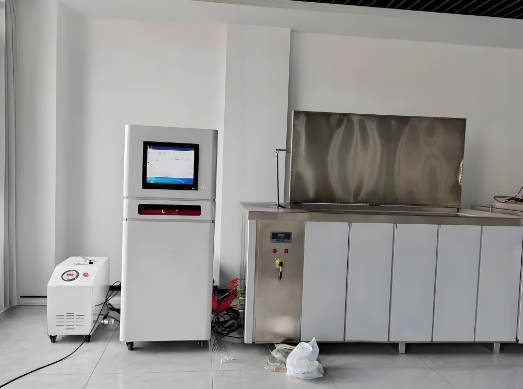
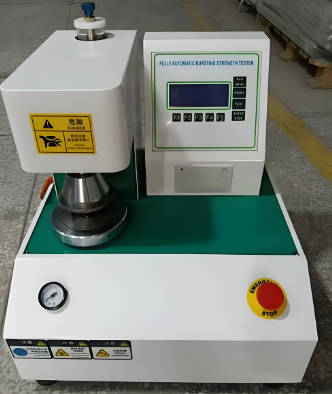
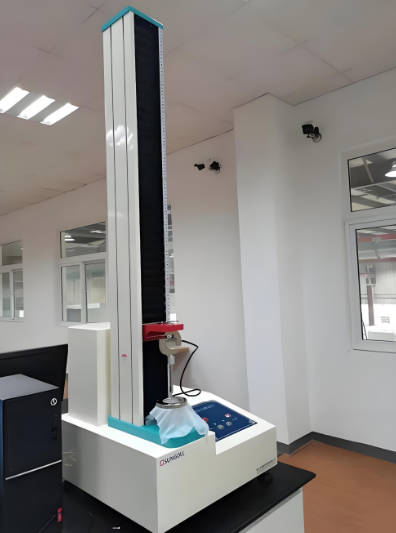
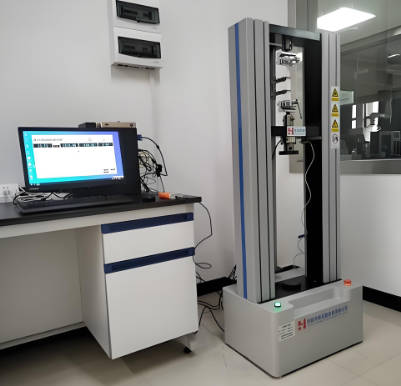
Our servo-hydraulic test frames and purpose-built loading rigs accommodate specimens ranging from small anchor coupons to full-size panel assemblies. The following categories represent the most frequently tested items:
- Natural stone panels for ventilated façades – granite, limestone, marble, sandstone and basalt slabs prepared with undercut back bolt holes
- Engineered stone and ceramic panels – sintered compact surfaces, porcelain stoneware and glass-fibre reinforced concrete elements with factory-drilled back holes
- Fibre-reinforced concrete and architectural concrete cladding – thin-walled panels and HPC/UHPC elements in which back bolt inserts are cast or post-installed
- Composite panels and high-pressure laminates – aluminium composite material, fibre-cement boards and phenolic resin panels for rear-ventilated rainscreen systems
- Anchor components and assemblies – stainless steel undercut anchors, expansion sleeves, threaded bushings and bonded-in threaded sockets intended for back bolt applications
- Substrate and connection materials – concrete blocks, masonry units and steel substructures representing the support to which the back bolt brackets are fastened
Pull-out Strength of Undercut Anchors in Natural Stone and Ceramic Panels – ETAG 029 and ČSN EN 1996
- Axial pull-out test on back bolt holes according to the principles of ETAG 029 and ČSN 73 2577: a single undercut anchor is installed in a back bolt hole drilled to the specified diameter, depth and undercut geometry. The anchor is loaded in pure tension perpendicular to the panel surface at a controlled displacement rate, and the maximum pull-out force, the load-displacement curve and the failure mode are recorded. The test determines the characteristic resistance of the anchorage for a given stone type and hole preparation method, providing the input data required for the European Technical Assessment of the anchor kit.
- Influence of edge distance and anchor spacing on pull-out resistance: test programmes are designed with a matrix of edge distances and anchor group configurations. Multiple back bolt anchors are pulled simultaneously or sequentially to evaluate the reduction in capacity caused by stress overlap in the stone. The results are used by Czech façade designers to establish the allowable anchor layout and to avoid premature edge breakout.
- Comparative testing of undercut geometries and drilling technologies: cylindrical, dovetail and stepped undercut profiles produced by diamond drilling or impact techniques are compared on the same stone lot. The pull-out force at failure and the load at first crack are correlated with the hole geometry, enabling anchor suppliers and stone fabricators to select the most reliable system for the specific mineralogical and structural properties of the stone.
- Pull-out test after freeze-thaw cycling according to ČSN EN 12371 and ČSN EN 14617-5: stone specimens with installed back bolt anchors are subjected to 100 or 200 freeze-thaw cycles in the presence of moisture, after which the residual pull-out capacity is measured. For Czech building projects in mountain regions, this test demonstrates that frost action does not cause microcracking around the undercut and that the anchorage retains its design strength over the service life.
- Pull-out under sustained load and creep behaviour: a constant tensile load corresponding to a defined percentage of the short-term ultimate pull-out force is applied to the back bolt anchor for 1 000 hours. The displacement is continuously monitored to detect creep deformation or delayed fracture. This test is frequently requested for prestigious projects in Prague and Brno where long-term reliability must be demonstrated beyond standard static calculations.
Research and Testing on Pull-out of Back Bolt Holes in Fibre-Reinforced and Lightweight Concrete Panels
- Pull-out of post-installed undercut anchors in glass-fibre reinforced concrete: anchors are installed in the thin, high-strength skin of GFRC panels, and pull-out tests are conducted at various embedment depths. Because the material lacks coarse aggregate, the failure mode may involve cone breakout, sleeve slip or tensile fracture of the anchor itself, and each failure mode is documented photographically and by microscopy to guide the optimisation of hole depth and undercut parameters.
- Testing of cast-in back bolt sockets in UHPC cladding elements: threaded inserts are cast directly into ultra-high performance concrete during panel production. Pull-out tests verify the tensile capacity of the insert and the bond between the insert and the surrounding matrix. The effect of curing conditions, fibre content and insert geometry on pull-out strength is systematically investigated for Czech precast manufacturers developing lightweight, high-strength façade panels.
- Influence of panel thickness and reinforcement on breakout resistance: a series of panels with varying thicknesses and reinforcement layouts are prepared, and back bolt anchors are pulled out. The cone angle and breakout surface are measured to calibrate the concrete capacity design method for thin, reinforced sections, which are increasingly popular in Czech commercial construction.
Testing of Back Bolt Connections in Composite Panels and High-Pressure Laminates – Research on Delamination and Bearing Failure
- Pull-through and bearing resistance of back bolt holes in composite panels: for aluminium composite material and fibre-cement panels, the bolt hole is subjected to tension through a sleeve or a countersunk screw. The test measures the force required to pull the fastener head through the panel skin or to tear out the core material. The research identifies the optimum hole diameter, washer geometry and torque level that maximises pull-out resistance without causing face dimpling or core crushing.
- Durability of back bolt connections in phenolic resin panels under moisture and temperature cycles: panels are conditioned at elevated humidity and temperature cycles simulating the Czech climate, and then the back bolt pull-out resistance is determined. The test reveals whether moisture absorption weakens the resin matrix and reduces the bearing capacity around the bolt hole, which is critical for ventilated façades exposed to driving rain.
- Fatigue pull-out testing for wind-induced vibration: back bolt connections are subjected to cyclic tensile loading at amplitudes corresponding to the gust pressures calculated for the building location. After 10 000 to 100 000 cycles, the residual pull-out strength is measured and compared with the static value. The test provides the data needed to demonstrate compliance with the fatigue requirements of ČSN EN 1991-1-4 for tall buildings in Prague and other Czech cities.
Report Acceptance and Regulatory Compliance for the Czech Republic
All research and testing on pull-out of back bolt holes described above is executed within the fully accredited scope of our ISO/IEC 17025 quality management system. Each test report displaying the ILAC mark is therefore automatically recognised by the Czech Trade Inspection Authority, local building authorities and all notified bodies in the European Union. For Czech stone suppliers, façade contractors and anchor manufacturers, these reports constitute legally robust evidence that the back bolt anchorage system meets the structural and durability requirements of the relevant European Technical Assessment Guidelines, harmonised product standards and the Czech national annexes to the Eurocodes. The documentation can be directly used to support CE marking, to obtain a national technical certificate, to pass factory production control audits and to resolve technical disputes concerning the load-bearing performance of mechanically anchored cladding.