Single Wire Resistivity Testing Experiment – Accredited High-Precision Resistance and Conductivity Measurement for the Czech Market
Our internationally accredited laboratory offers a dedicated single wire resistivity testing experiment that provides manufacturers and importers with the most accurate determination of electrical conductivity and material purity for individual metallic wires. All measurements are performed within our ISO/IEC 17025 quality system, and every report bearing the ILAC mark is unconditionally accepted by the Czech Trade Inspection Authority, customs offices and all notified bodies in the European Union. For Czech cable makers, winding wire producers, resistance-alloy suppliers, and importers of copper and aluminium conductors, this experiment delivers legally robust data on resistivity, conductivity expressed as %IACS, and the temperature coefficient of resistance. These values are mandatory for declaring conformity with harmonised conductor standards, for certifying material for use in motors and transformers under the Ecodesign regulations, and for demonstrating that the electrical performance declared on the product label matches the delivered goods.
Product Samples We Regularly Subject to the Single Wire Resistivity Testing Experiment
Our precision bridges, micro-ohmmeters, climatic cabinets and high-resolution balances allow us to characterise wires from the thinnest bonding filaments to heavy power conductors. The most frequently tested categories are:
- Copper wire, rod and bar – electrolytic tough-pitch copper, oxygen-free copper, silver-bearing copper and tinned copper conductors in round and rectangular profiles
- Aluminium wire and alloy conductors – pure aluminium, aluminium-magnesium-silicon alloys and aluminium-clad steel wires for overhead transmission and automotive harnesses
- Enamelled and film-insulated winding wires – fine wire with polyurethane, polyester, polyesterimide and polyamide-imide coatings for relays, solenoids and electric motors
- Resistance alloys and heating-element wires – nickel-chromium, nickel-copper, iron-chromium-aluminium, copper-nickel and manganin wires for heating cables, precision resistors and shunts
- Thermocouple and compensating cables – type K, J, T, N and E thermocouple extension wires where resistivity and thermoelectric uniformity must be verified
- Bonding wires and ultra-fine filaments – gold, aluminium and copper bonding wires for semiconductor packaging, tested with adapted four-wire connections
- Steel and composite conductors – galvanised steel earth wires, copper-clad steel tracer wires and aluminium conductor steel-reinforced cores
- Conductive fibres and novel materials – carbon nanotube yarns, metal-coated polymer fibres and conductive textiles for smart garments
The Single Wire Resistivity Testing Experiment – High-Accuracy Four-Terminal Kelvin Measurement
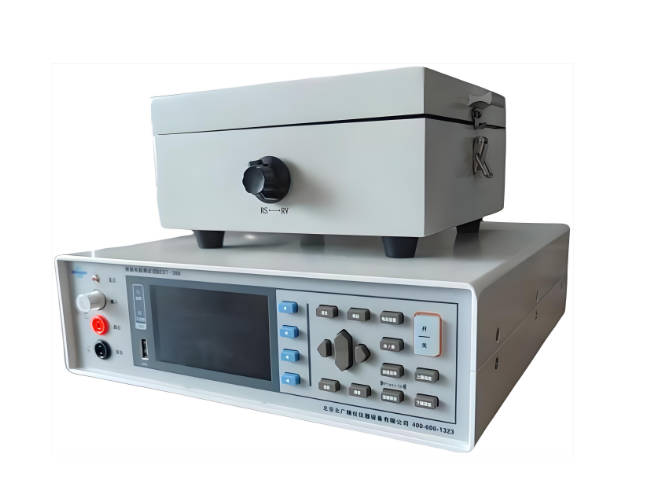
- Determination of resistance by the four-terminal Kelvin method according to ČSN EN 60468 and ASTM B193: the wire specimen, typically 1 m or longer, is placed in a temperature-controlled oil bath or air cabinet maintained at 20.0 °C ±0.1 °C. Current-reversal techniques are used with a precision DC current source, and the voltage drop between two knife-edge potential contacts spaced a known distance apart is measured with a nanovoltmeter or a high-resolution digital micro-ohmmeter. By eliminating lead and contact resistances, the four-terminal arrangement resolves resistances down to micro-ohms, ensuring that the single wire resistivity testing experiment yields the true volume resistivity free from systematic errors.
- Measurement of the cross-sectional area by the gravimetric method: a known length of wire is weighed on a calibrated analytical balance to 0.1 mg resolution, and its volume is calculated from the mass and the material density determined by the Archimedes method or from certified reference data. The uniform cross-sectional area is then computed as volume divided by length. For round wires, the diameter is also measured with a laser micrometer at multiple positions, and the ovality is reported as a quality indicator. This dual approach of gravimetric and dimensional measurement meets the requirements of ČSN EN 60152 and ASTM B258.
- Calculation of volume resistivity and conductivity in %IACS: the volume resistivity in Ω·m or Ω·mm²/m is calculated from the measured resistance, the cross-sectional area and the gauge length. The electrical conductivity is expressed as a percentage of the International Annealed Copper Standard, where 100 % IACS corresponds to a resistivity of 0.017241 Ω·mm²/m at 20 °C. For Czech importers of copper wire, this number is the primary acceptance criterion and is checked against the limits in ČSN EN 13602 and ASTM B49.
- Correction for temperature and thermal EMF: if the measurement cannot be performed at exactly 20 °C, the resistance is corrected using the temperature coefficient of resistance determined on a companion sample. Any residual thermal electromotive forces at the potential contacts are eliminated by averaging readings obtained with the current flowing in both directions. The corrected resistance value and the uncertainty budget, which typically yields an expanded uncertainty below 0.05 % of reading, are reported.
- Resistance uniformity scan along the wire length: for premium winding wires and instrument wires, the specimen is moved stepwise through the potential contacts while recording the resistance of each segment. The maximum deviation from the mean is reported as the resistivity uniformity index, a parameter frequently specified by Czech motor manufacturers to guarantee consistent winding resistance.
Resistivity Determination for Resistance Alloys, Heating Wires and Precision Resistors
- Resistivity and conductivity of nickel-chromium and iron-chromium-aluminium alloys according to ASTM B267 and internal protocols: the wire is formed into a U-shape and connected to the four-terminal bridge. Because these alloys have higher resistivities than copper, shorter specimens are used to keep the resistance within the instrument's optimal range. The volume resistivity is determined at 20 °C, and the result is compared with the nominal value for the alloy grade, e.g. 1.35 Ω·mm²/m for NiCr 80/20.
- Temperature coefficient of resistance (TCR) measurement for manganin and constantan: the wire specimen is placed in a programmable oven, and the resistance is measured at 20 °C, 40 °C, 60 °C and 80 °C. The TCR in ppm/K is calculated from the slope of the resistance-temperature curve. For precision shunt materials such as manganin, the TCR must be less than ±10 ppm/K, and the experiment provides the evidence required by Czech manufacturers of electrical measurement equipment.
- Resistivity of fine thermocouple and compensating wires: wires as thin as 0.1 mm are tested with micro-manipulator probe contacts to avoid bending stress that could alter the resistance. The measured resistivity also serves as a check on the chemical composition of the alloy, because the Seebeck coefficient and the resistivity are both sensitive to minor element additions and impurities.
Specialised Single Wire Resistivity Experiments for Quality Assurance and Failure Analysis
- Rapid resistivity screening of incoming copper wire shipments: for Czech cable plants receiving copper rod from various suppliers, we provide a batch inspection service in which resistivity, wire diameter, elongation and surface quality are measured on a single specimen set. The complete test report, issued within 48 hours, allows the factory to release the raw material to production without delay.
- Investigation of resistivity anomalies and purity assessment: when a wire exhibits abnormally high resistivity, the impurities present in the copper or aluminium are often the cause. We combine the single wire resistivity testing experiment with chemical analysis by ICP-OES to identify the contaminating elements and quantify their effect on the conductivity, providing a root-cause analysis for quality engineers.
- Effect of annealing and drawing on resistivity: wires drawn to different reduction ratios and then annealed under various conditions are tested to map the influence of cold work and grain size on the resistivity. The resulting data help Czech wire drawers to optimise their process parameters so that the final product meets the maximum resistivity limits without over-annealing and wasting energy.
- Resistivity stability under thermal cycling and over time: for applications in precision resistors and aerospace harnesses, the wire resistivity is measured before and after 1 000 thermal cycles between -40 °C and +125 °C, and after natural ageing for up to 12 months. The drift in resistivity is reported, and the suitability of the wire for long-term stable service is certified.
Report Acceptance and Regulatory Compliance for the Czech Republic
All single wire resistivity testing experiments are performed within the accredited scope of our ISO/IEC 17025 quality management system. Every report that carries the ILAC mark is therefore recognised automatically by the Czech Trade Inspection Authority, customs authorities and all notified bodies in the European Union. For Czech wire importers, cable manufacturers and motor producers, the test report is the definitive proof that the conductor meets the requirements of the applicable harmonised standards, such as ČSN EN 13602, ČSN EN 60317 and ČSN EN 60152. It can be directly used to issue inspection certificates according to ČSN EN 10204, to support CE marking on electrical equipment, and to provide independent evidence in supplier audits and commercial disputes concerning the quality of conductive materials.