Stacking Test – Accredited Compression and Stacking Stability Testing for Packaging and Transport Units on the Czech Market
Our internationally accredited laboratory provides a comprehensive stacking test service designed to verify the ability of packages, containers and transport units to withstand the compressive loads encountered during warehouse storage and freight transport. All testing is performed under the strict regime of ISO/IEC 17025, and each report bearing the ILAC mark is therefore unconditionally accepted by the Czech Trade Inspection Authority, customs offices and all notified bodies within the European Union. For Czech exporters, importers and packaging manufacturers, the stacking test is an indispensable tool for preventing product damage, optimizing material usage and proving compliance with international distribution requirements. Whether simulating a full pallet load in a high-bay warehouse or the long-term static load on a bottom carton during container shipment, we provide the independent data needed to design safe and cost-effective packaging.
Product Samples We Regularly Subject to Stacking Tests
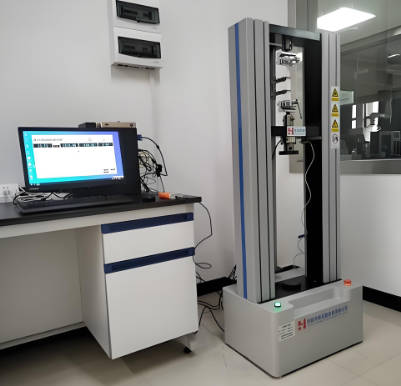
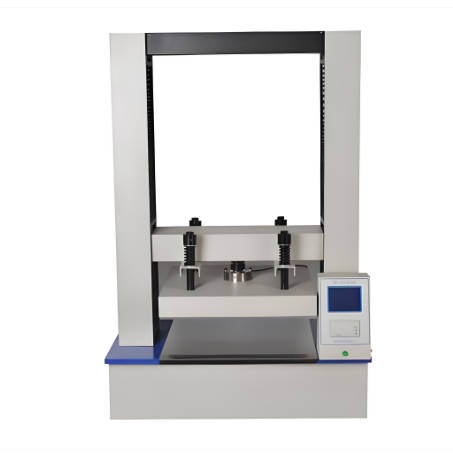
Our compression testing machines with capacities up to 200 kN and large platens accommodate a wide array of packaging and load carriers. The following categories represent the most frequently tested items:
- Corrugated cardboard boxes and cartons – single-wall and double-wall shipping containers, die-cut mailers, and heavy-duty triple-wall boxes
- Pallets and pallet units – wooden, plastic and metal pallets, pallet collars, and entire palletized loads with stretch wrap
- Plastic crates, totes and trays – nestable and stackable containers, bottle crates, bread trays and automotive parts trays
- Intermediate bulk containers (IBCs) and tanks – rigid plastic composite IBCs, foldable bulk boxes and liquid totes
- Drums, barrels and pails – steel, plastic and fibre drums for chemicals, lubricants and food ingredients
- Insulated shipping containers and thermal boxes – expanded polystyrene boxes and polyurethane-insulated containers for pharmaceutical cold chains
- Retail and consumer packaging – folding cartons, display trays, and shelf-ready packaging destined for Czech retail chains
- Load-bearing furniture and storage units – flat-pack furniture, shelving units and storage racks evaluated for stacking strength
Corrugated Boxes, Cartons and Transport Packages – Stacking Test According to ISO, EN and ISTA Standards
- Static load stacking test according to ČSN EN ISO 2234: a completely filled transport package is placed on a rigid horizontal surface and a load plate is lowered onto the top face. A static mass equal to the weight of the packages that would be stacked on it during actual storage or transport is applied and maintained for a specified duration, typically 24 hours or until the product stabilizes. After the test, the package is inspected for distortion, collapse, or any damage to the contents. This test is essential for demonstrating that the packaging can survive long-term warehousing under Czech climatic conditions without creeping deformation.
- Compression resistance and top-to-bottom crushing strength according to ČSN EN ISO 12048: the empty or filled package is compressed between two parallel platens at a constant rate of 10 mm/min until failure or a preset maximum load is reached. The maximum compression force in newtons is recorded, and the force-deflection curve is analyzed to identify the point of buckling. This data is used to calculate the safe stacking height for a given safety factor, typically 3 to 5, as required by the Czech logistics sector.
- ISTA 1C, 2A and 3E tests incorporating stacking: for packaged products shipped through the parcel delivery or less-than-truckload distribution channels, we perform the complete ISTA test sequences. The stacking component applies a calculated load derived from the transport vehicle height for a minimum of 1 hour while simultaneously subjecting the package to vibration or after a free-fall drop. This integrated test ensures that the packaging can withstand the combined stresses of handling and compression, which is particularly important for e-commerce goods sold to Czech consumers.
- Creep and long-duration stacking under controlled climate: for high-value industrial goods stored for months in unheated Czech warehouses, we perform stacking tests at constant temperature and humidity, monitoring the deformation of the package over extended periods of up to 28 days. The results are used to define maximum storage times and to specify the number of permissible stacking layers for each season.
Pallets, Palletized Loads and Load Carriers – Stacking Test for Materials Handling and Logistics
- Pallet stacking and compression test according to ČSN EN ISO 8611: a pallet is placed on a flat surface, and a uniformly distributed load is applied to the top deck to simulate the weight of stacked pallet loads. The test verifies the load capacity of the pallet under static stacking and the deflection of the deck boards. After the specified load duration, the residual deformation is measured, and the pallet is inspected for broken components, loose fasteners, or splitting.
- Stacking test on complete palletized units: an entire pallet load is built with the actual product and stretch-wrapped according to the intended distribution practice. A second pallet load of equal mass is placed on top, or a compression platen is used to simulate multiple stacked pallets. The stability of the load, the deformation of the lower boxes and the tension of the stretch film are evaluated. This test is crucial for export shipments where Czech manufacturers palletize goods for sea freight or for automated high-bay warehouses.
- Plastic crates, trays and nestable containers according to ČSN EN 13117: stackable plastic containers such as bottle crates, bakery trays and automotive tote boxes are loaded with a distributed mass and tested under compression to verify the load-bearing capacity of the stacking lugs, ribs and sidewalls. The test is performed after conditioning at -20 °C and +40 °C to reflect the extremes of the Czech climate, ensuring that the crates will not fail in cold store environments or during summer transport.
Intermediate Bulk Containers, Drums and Liquid-Handling Packaging – Top Load and Stacking Stability
- Top compression and stacking test for rigid plastic IBCs according to ČSN EN 13530 and ADR requirements: the IBC is filled with water to its maximum gross mass, and a uniform load equal to the weight of two fully loaded IBCs is applied to the top for a period of at least 24 hours. The container must not show any leakage, permanent deformation that affects handling, or cracking of the outer cage. This test is mandatory for IBCs used for the transport of dangerous goods in compliance with the ADR agreement, which is strictly enforced in the Czech Republic.
- Stacking load test for steel and plastic drums according to ČSN EN ISO 16467 and ASTM D4577: drums filled with water or the intended contents are stacked in a test frame with the bottom drum supporting the calculated mass of a full stack. After the test period, the drums are leak-tested and inspected for distortion. The safe stacking height declared by the drum manufacturer is verified independently, and the report is used as a proof of compliance for chemical and food-grade shipments.
- Stacking of fibre drums and composite containers: because fibre drums are susceptible to creep and moisture-induced weakening, we condition them at 85 % relative humidity before and during the stacking test. The deformation is monitored, and the time to collapse under a reduced safety factor is determined to establish reliable shelf-life and storage recommendations for Czech importers of dry food ingredients and powders.
Report Acceptance and Regulatory Compliance for the Czech Republic
All stacking tests described above are performed within the scope of our ISO/IEC 17025 accreditation. Each test report carrying the ILAC mark is therefore automatically recognized by the Czech Trade Inspection Authority, customs authorities and all notified bodies. For Czech packaging manufacturers, exporters of palletized goods and importers of industrial containers, the test report constitutes legally robust evidence that the packaging system meets the relevant transport regulations and can withstand the mechanical stresses of the distribution chain. It can be directly used for supplier qualification, for the approval of packaging for dangerous goods transport under ADR, and for demonstrating due diligence in the event of cargo damage claims.