Temperature Cycling Test – Accredited Thermal Shock and Cycling Services for Electronic, Automotive and Industrial Components
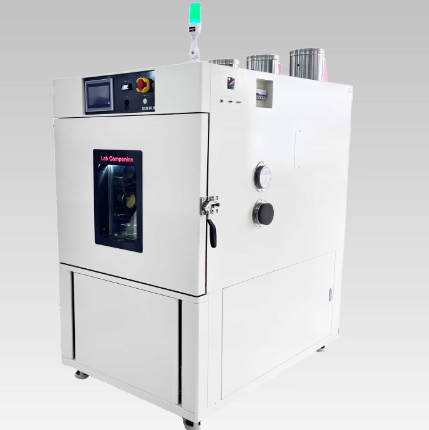
Our laboratory provides comprehensive temperature cycling test services in strict compliance with ISO/IEC 17025, ensuring that every report bearing the ILAC mark is unconditionally accepted by the Czech Trade Inspection Authority, customs offices and notified bodies across the European Union. Temperature cycling tests are essential for validating the reliability of products exposed to alternating thermal stress – from automotive engine compartments and outdoor telecom equipment to consumer electronics carried between a heated office and freezing winter streets. By precisely controlling ramp rates, dwell times and extreme temperatures in chambers with volumes up to 2 500 liters, we help Czech importers, manufacturers and design engineers identify weak solder joints, material mismatches and sealing failures long before field returns occur.
Product Samples We Regularly Subject to Temperature Cycling Tests
Our thermal chambers accommodate components, subassemblies and complete products. The following categories represent the most frequently tested items:
- Electronic components and assemblies – integrated circuits, ball grid array packages, printed circuit boards, solder joints, connectors and passive components
- Automotive electronic modules – engine control units, transmission controllers, body control modules, sensors, actuators and infotainment systems
- Lighting products – LED lamps, modules and drivers, luminaires for indoor and outdoor use, street lighting and automotive headlamps
- Telecommunication and consumer equipment – smartphones, tablets, base station units, routers, set-top boxes and wearables
- Medical devices and laboratory instruments – portable diagnostic equipment, infusion pumps, patient monitors and sterilizable electronic tools
- Batteries and energy storage systems – lithium-ion cells and battery packs, power banks and uninterruptible power supplies
- Plastics, composites and sealed enclosures – outdoor electrical cabinets, gaskets, encapsulated coils and fiber-reinforced structural parts
- Mechanical assemblies and fasteners – bolted joints, press-fit connections and thermally activated actuators
Electronic Components and Printed Board Assemblies – Temperature Cycling Test According to IEC 60068-2-14 and JEDEC Standards
- Test Na – rapid temperature change with prescribed transition time according to ČSN EN 60068-2-14 (IEC 60068-2-14): specimens are transferred between a hot chamber at +100 °C and a cold chamber at -40 °C within 15 seconds. The dwell time at each extreme is at least 10 minutes, and 100 to 1 000 cycles are performed to evaluate the resistance of solder interconnects, wire bonds and encapsulations to thermomechanical fatigue. After cycling, electrical continuity and visual inspection for cracks are carried out.
- Test Nb – temperature change with specified rate of change: a single-chamber method applies a ramp rate of 3 °C/min, 5 °C/min or 10 °C/min between -55 °C and +125 °C. The number of cycles is typically 200 to 500. This test is used to verify the integrity of conformal coatings, underfills and large ceramic capacitors, which may be damaged by excessive thermal gradients.
- JEDEC JESD22-A104 condition G, H and J: for semiconductor packages, temperature cycling between -40 °C and +125 °C (condition G) or -55 °C and +125 °C (condition H) is performed for 700 to 1 000 cycles. The test detects failures such as bond lift, die cracking and solder ball fatigue. Post-test inspection includes scanning acoustic microscopy and electrical test.
- Shock test Nc – rapid temperature change by two-bath method according to ČSN EN 60068-2-14: for small components, a liquid-to-liquid thermal shock is performed by immersing the device in hot liquid at +150 °C and then in cold liquid at -65 °C within seconds. This extreme test uncovers latent package defects and is often required for MIL-grade or aerospace-qualified parts.
- Evaluation of solder joint reliability by cross-sectioning: after temperature cycling, representative solder joints are microsectioned and analyzed by optical and scanning electron microscopy to measure crack length and intermetallic compound growth, correlated with the number of cycles.
Automotive Components and Modules – Temperature Cycling Test According to ISO 16750-4 and LV 124
- Thermal cycling for electrical and electronic equipment in road vehicles according to ČSN EN ISO 16750-4: tests simulate the full vehicle life by applying temperature profiles that range from -40 °C (cold start) to +85 °C (engine compartment) or +105 °C (high-temperature locations). The cycle includes rapid transitions up to 40 K/min. Engine-mounted components are tested for up to 1 000 cycles to reflect thermal fatigue from frequent start-stop operation.
- Combined temperature and humidity cycling for passenger compartment electronics: a 24-hour cycle alternates between -20 °C and +65 °C at 85 % relative humidity during the warm phase, simulating condensation and drying that occur when a vehicle is used in the Czech winter. This test reveals corrosion of connector contacts and delamination of displays.
- Power temperature cycling for semiconductor devices in transmission and engine control: the device is actively powered during the temperature change so that internal self-heating adds to the external stress. Junction temperature is monitored and cycled between -40 °C and +150 °C, with failure criteria based on electrical parameter drift.
- Testing of sensors and actuators under thermal cycling with functional monitoring: pressure sensors, position sensors and solenoid valves are continuously monitored during cycling between -40 °C and +120 °C. Output signal deviation, response time and hysteresis are recorded and must remain within the tolerances specified by the Czech automotive supply chain.
Lighting and LED Products – Temperature Cycling Test According to ČSN EN 62717 and ČSN EN 60598
- Rapid temperature cycling for LED modules according to ČSN EN 62717 and IES LM-82: modules are cycled between -40 °C and +85 °C with a dwell time sufficient for stabilization. Luminous flux, chromaticity coordinates and forward voltage are measured before and after 250, 500 and 1 000 cycles to detect premature lumen depreciation or colour shift.
- Thermal cycling of luminaires with integrated electronics according to ČSN EN 60598-1: complete luminaires, including their built-in drivers, are subjected to the temperature limits declared by the manufacturer. After cycling, dielectric strength and insulation resistance are verified to ensure that thermal stress has not compromised safety.
- Condensation test combined with temperature cycling for outdoor luminaires: the test simulates the Czech climate by cooling the luminaire to -20 °C, then exposing it to +25 °C air with high humidity so that condensation forms inside. After 50 cycles, the luminaire must still pass the IP protection test and show no corrosion of internal reflectors.
Batteries and Energy Storage Devices – Temperature Cycling Test According to UN 38.3 and IEC 62133
- Temperature cycling according to UN 38.3 (T2): lithium cells and batteries are subjected to 10 cycles between -40 °C and +75 °C with a transfer time not exceeding 30 minutes and a 6-hour dwell at each extreme. After cycling, no leakage, venting, disassembly or rupture is permitted, and the battery must retain electrical continuity. This test is mandatory for air transport approval.
- Thermal cycling for battery packs according to IEC 62133-2: packs are cycled between the upper and lower charging temperature limits declared by the cell manufacturer. Following 50 cycles, capacity loss must not exceed the specified limit, and insulation resistance must remain above 100 MΩ at 500 V DC.
- Rapid temperature change for automotive battery packs according to ISO 12405 and EU 2023/1542: the entire pack, including the battery management system, is cycled between -40 °C and +85 °C while monitoring cell voltages and temperatures. The test verifies that the BMS correctly interprets temperature and prevents charging outside safe limits.
Materials, Enclosures and Sealed Parts – Temperature Cycling Test for Dimensional Stability and Ingress Protection
- Testing of plastic enclosures and sealing gaskets according to ČSN EN 60529 and ČSN EN 62262: outdoor electrical cabinets, junction boxes and sealed connectors are temperature-cycled between -25 °C and +55 °C. After 50 cycles, the IP rating (e.g., IP66) is verified by dust and water jet tests. The gasket compression set is measured to ensure long-term sealing performance.
- Cycling of adhesively bonded and welded assemblies: specimens representing bonded or welded joints are cycled between -40 °C and +80 °C, and the residual strength is measured in a tensile test according to ČSN EN ISO 527 or ČSN EN ISO 6892-1. The test assesses the compatibility of coefficients of thermal expansion.
- Temperature cycling of fiber-reinforced composites: carbon-fiber and glass-fiber reinforced laminates are subjected to 100 cycles between -55 °C and +120 °C. After cycling, flexural strength and interlaminar shear strength are determined according to ČSN EN ISO 14125 and compared with unconditioned samples to detect microcracking of the matrix.
Report Acceptance and Regulatory Compliance for the Czech Market
All temperature cycling tests described above are performed under the rigid framework of our ISO/IEC 17025 accreditation. Each test report bearing the ILAC mark is therefore automatically recognized by the Czech Trade Inspection Authority, customs authorities and all notified bodies within the European Union. For manufacturers, importers and engineering firms in the Czech Republic, this means that the report can be directly used as evidence of product reliability, as a basis for CE marking, and as a valid document in supplier qualification and warranty dispute resolution.