Torque Coefficient Testing Service – Accredited Nut Factor and Tightening Characterisation for Bolted Connections on the Czech Market
Our internationally accredited laboratory delivers a specialist torque coefficient testing service that provides Czech manufacturers, structural steel fabricators, automotive suppliers and fastener importers with the precise, traceable data they need to relate the tightening torque to the preload achieved in a bolted joint. All tests are conducted within the strict framework of ISO/IEC 17025, and every report bearing the ILAC mark is unconditionally accepted by the Czech Trade Inspection Authority, the Technical Inspection of the Czech Republic, customs offices and all notified bodies across the European Union. The torque coefficient, often called the nut factor or K‑factor, is not a material constant – it varies with thread geometry, surface finish, lubrication, plating and assembly speed. Our torque coefficient testing service measures the complete torque-tension relationship, including the individual friction components under the bolt head and in the threads, giving design engineers and quality managers the confidence that the specified tightening torque will produce the intended clamp force in every joint on the structure, engine or machine.
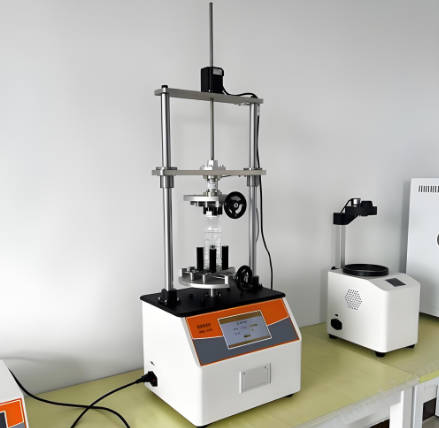
Product Samples We Regularly Subject to Torque Coefficient Testing
Our computer-controlled tightening simulators accept a wide range of fastener sizes and grades. The following categories represent the most frequently tested items:
- High-strength structural bolts and assemblies – bolts, nuts and washers according to EN 14399 for preloaded connections in steel buildings and bridges
- Hexagon head bolts, socket head cap screws and studs – metric coarse and fine threads from M4 to M36 in property classes 8.8, 10.9 and 12.9
- Automotive engine and chassis fasteners – cylinder head bolts, conrod bolts, wheel bolts and flywheel screws with specific friction requirements
- Stainless steel bolts and nuts – A2 and A4 grades where galling risk must be quantified alongside the torque coefficient
- Self-tapping and thread-forming screws – fasteners for plastics, sheet metal and light alloys where the thread-forming torque is part of the tightening process
- Coated and plated fasteners – zinc-flake, zinc-nickel, hot-dip galvanized, phosphate and solid-film lubricant coated bolts
- Blind rivet bolts and lockbolts – speciality fasteners for closed sections where access is only from one side
- Bolt, nut and washer assemblies with applied lubricants – pre-applied wax, molybdenum disulphide paste and oil-lubricated parts
Torque Coefficient Testing Service for High-Strength Structural Bolting According to EN 14399 and ISO 16047
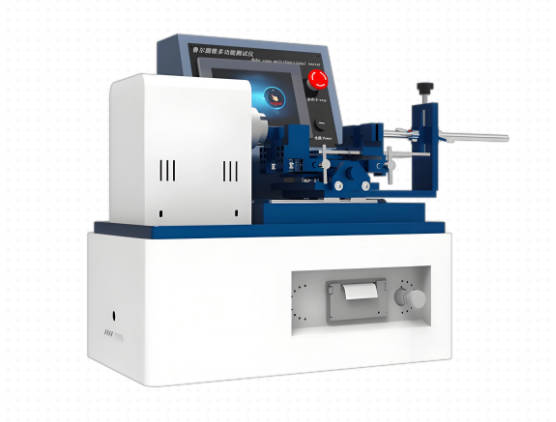
- Determination of the torque coefficient K according to ČSN EN ISO 16047: the test bolt is installed in a test fixture equipped with a multi-axis load cell that simultaneously measures the tightening torque, the resulting axial preload, the thread friction torque and the bearing friction torque. Tightening is performed under controlled speed and angle conditions, and the torque coefficient K is calculated as the ratio of the tightening torque to the product of the bolt nominal diameter and the preload. For a given bolt lot, the mean K-value and the standard deviation are reported, providing the statistical basis for setting the tightening torque on site.
- Verification of the K-class requirement for high-strength structural bolting assemblies according to ČSN EN 14399-2: assemblies intended for preloaded use in the Czech Republic must demonstrate that the individual K-values lie within a specified class range, commonly K1 or K2. Our torque coefficient testing service tests the complete assembly – bolt, nut and washer – as supplied by the manufacturer, and the result is reported on an inspection certificate according to ČSN EN 10204 Type 3.1.
- Measurement of the overall friction coefficient, thread friction coefficient and bearing face friction coefficient: the instrumented tightening system separates the total tightening torque into its three components: the pitch torque needed to stretch the bolt, the thread friction torque and the under-head friction torque. From these, the total friction coefficient μtot, the thread friction μth and the bearing friction μb are calculated. Czech fastener coaters use this breakdown to identify whether a change in the coefficient is caused by the thread surface, the washer or the lubrication regime.
- Influence of tightening speed and temperature on the torque coefficient: the torque coefficient is measured at several rotational speeds and at ambient temperatures of -10 °C to +40 °C to replicate the conditions on a Czech construction site in winter and summer. The variation of K with speed and temperature is reported, enabling the site engineer to adjust the torque setting or to select a lubricant that reduces the temperature sensitivity.
- Torque coefficient after relaxation and re-tightening: an assembly is tightened to the specified preload, then untightened and immediately retightened. The change in the torque coefficient after the first tightening cycle is documented, because reused fasteners on a Czech steel erection may behave differently from new ones.
Torque Coefficient Testing Service for Automotive, Engine and Industrial Fasteners
- Torque-tension testing of cylinder head and conrod bolts according to OEM specifications and VDI 2230: the fastener is tightened in a replica joint that mimics the stiffness of the actual clamped parts. The torque, angle and preload are recorded through the yield point, and the torque coefficient at the elastic tightening stage and the tightening factor αA are determined. This torque coefficient testing service is used by Czech tier‑1 automotive suppliers to release new fastener lots for engine assembly.
- Measurement of the tightening factor and scatter for angle-controlled tightening: for fasteners tightened by the angle method, the scatter of the preload at a defined angle is measured on a sample of 30 or more bolts. The tightening factor is calculated, and the minimum preload is compared with the design requirement. Czech powertrain engineers use these data to set the process windows on the automated assembly line.
- Friction stability and galling tendency of stainless steel and coated fasteners: a sequence of repeated tightening and loosening cycles is performed on the same bolt and nut pair. The torque coefficient and the thread damage are recorded after each cycle. For A2‑70 and A4‑80 stainless fasteners widely used in the Czech food and chemical industries, the test reveals whether galling will occur before the design preload is reached.
- Determination of the prevailing torque of locking nuts and all-metal lock nuts according to ČSN EN ISO 2320: the prevailing torque – the torque necessary to turn the nut on the bolt thread before any clamping force is generated – is measured during the assembly test. The torque coefficient is then determined for the tightening phase, and the results are reported separately. This data is required for CE marking of lock nuts placed on the Czech market.
Torque Coefficient Testing Service for Coated, Plated and Lubricated Fasteners – Surface Engineering Optimisation
- Effect of zinc-flake and zinc-nickel coatings on the torque coefficient: the same bolt geometry is tested in the uncoated, zinc-flake and zinc-nickel plated conditions. The change in the mean torque coefficient and the increase or decrease in scatter are quantified, and the friction breakdown identifies whether the under-head or thread friction dominates the change. Czech electroplating shops use this service to tune their process parameters so that the plated fasteners remain within the K‑class required by the structural steelwork contractor.
- Evaluation of pre-applied lubricants, waxes and dry-film coatings: bolts coated with a solid lubricant, such as molybdenum disulphide or PTFE, are tested to verify that the torque coefficient is low and consistent. The test also checks that the lubricant does not degrade when the bolt is stored for several months in a Czech warehouse or exposed to condensation.
- Testing of hot-dip galvanized bolts and nuts with overtapped threads: the large thickness and variability of the zinc layer causes the torque coefficient to differ markedly from that of black bolts. The effect of the overtapping of the nut on the torque coefficient and the risk of thread stripping are evaluated, and the results are used to issue an approved tightening torque for galvanized assemblies in outdoor structures.
Report Acceptance and Regulatory Compliance for the Czech Republic
All measurements performed within our torque coefficient testing service are executed under the fully accredited scope of our ISO/IEC 17025 quality management system. Each test report that carries the ILAC mark is therefore recognised automatically by the Czech Trade Inspection Authority, the Technical Inspection of the Czech Republic, customs offices and all notified bodies in the European Union. For Czech steel fabricators, fastener distributors, automotive component producers and surface finishing shops, the report constitutes legally robust evidence that the bolted connections meet the torque‑tension requirements of the applicable harmonised standards, including ČSN EN 14399, ČSN EN ISO 16047 and ČSN EN ISO 2320. The documentation can be directly used to issue inspection certificates according to ČSN EN 10204, to support CE marking under the Construction Products Regulation, to obtain national technical approvals, and to resolve disputes concerning the reliability of bolted assemblies.